



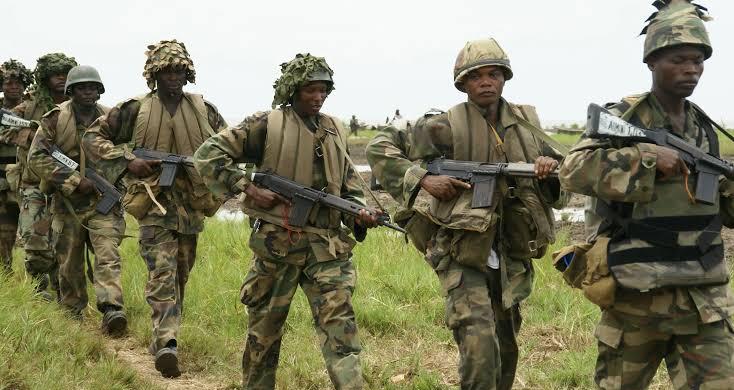
Nigeria’s security crisis is often discussed through the lens of terrorism, banditry, insurgency, communal violence, and kidnapping. But beneath the headlines lies a heartbreaking reality that receives far less attention: the impact of insecurity on Nigeria’s children.
In this powerful episode of The Other Side, host Rimamnde Shawulu Kwewum examines how thousands of Nigerian children have become victims of conflict, abduction, displacement, forced recruitment, forced marriages, and violence since the rise of Boko Haram in 2009.
From the infamous Chibok school abduction that shocked the world to the continuing captivity of Leah Sharibu and dozens of missing Chibok girls, this episode explores a painful question: What has happened to Nigeria’s children during more than a decade of insecurity?
The program traces the evolution of child victimization across different regions of Nigeria. It examines how insurgent groups in the North-East transformed children into direct targets through recruitment, indoctrination, forced marriages, and even suicide bombing operations. It also explores how criminal bandit groups in the North-West discovered the profitability of mass school kidnappings, creating what many observers now describe as a kidnapping economy.
Viewers will revisit some of Nigeria’s most significant school abductions, including Chibok, Kankara, Kagara, Jangebe, Tegina, Greenfield, and other attacks that left communities traumatized and the nation searching for answers.
This episode also examines a major challenge facing policymakers, researchers, and security agencies: the lack of reliable data. How many children have actually been killed, kidnapped, displaced, or recruited into armed groups since 2009? How many remain missing? How many deaths have gone undocumented in remote communities?
The discussion goes beyond statistics to explore the realities faced by children in captivity. Depending on the perpetrators, abducted children may face forced marriage, sexual violence, indoctrination, forced labor, recruitment into armed groups, ransom negotiations, starvation, disease, and severe psychological trauma.
The consequences do not end after release. Many survivors struggle with stigma, interrupted education, mental health challenges, and long-term social reintegration. For countless families, the scars of abduction remain long after children return home.
The episode further compares the regional dimensions of the crisis:
- The North-East, where insurgency remains the dominant threat.
- The North-West, where banditry and mass kidnappings have become widespread.
- The North-Central region, where communal violence, militia attacks, and displacement continue to affect children.
- The South-West, where emerging kidnapping networks are raising concerns about the possible expansion of threats into previously safer areas.
One of the most important themes explored is the attack on education itself. Every school abduction creates fear among parents, teachers, and students. Schools close. Attendance drops. Entire communities lose years of educational progress. Some children never return to the classroom.
The program also evaluates government responses, including military rescue operations, security initiatives, the Safe Schools Initiative, and investments in protective infrastructure. While these efforts have achieved important successes, difficult questions remain about prevention, prosecution, victim support, intelligence gathering, and long-term rehabilitation.
Beyond security, this discussion raises a fundamental governance question: Can a state fulfill its most basic responsibility if parents are no longer certain their children can travel to school safely?
At its core, this episode is not simply about terrorism, banditry, or kidnapping. It is about the future of Nigeria. It is about whether a nation can protect its most vulnerable citizens and preserve the hopes of an entire generation.
Join Rimamnde Shawulu Kwewum on The Other Side for a fact-based, thought-provoking examination of one of the most important but often overlooked dimensions of Nigeria’s security crisis.
What should Nigeria do differently to protect children from kidnapping, terrorism, and conflict?
Share your views in the comments section.
🔔 Subscribe for weekly insights on Nigeria’s politics and democracy.