




Political language is never neutral. As always, it reveals not only what a leader thinks but how that thinking is formed, so that in moments of elite contestation words do more than persuade: they expose the hubris, depth, coherence, and limits of the political reasoning that drives ambition.
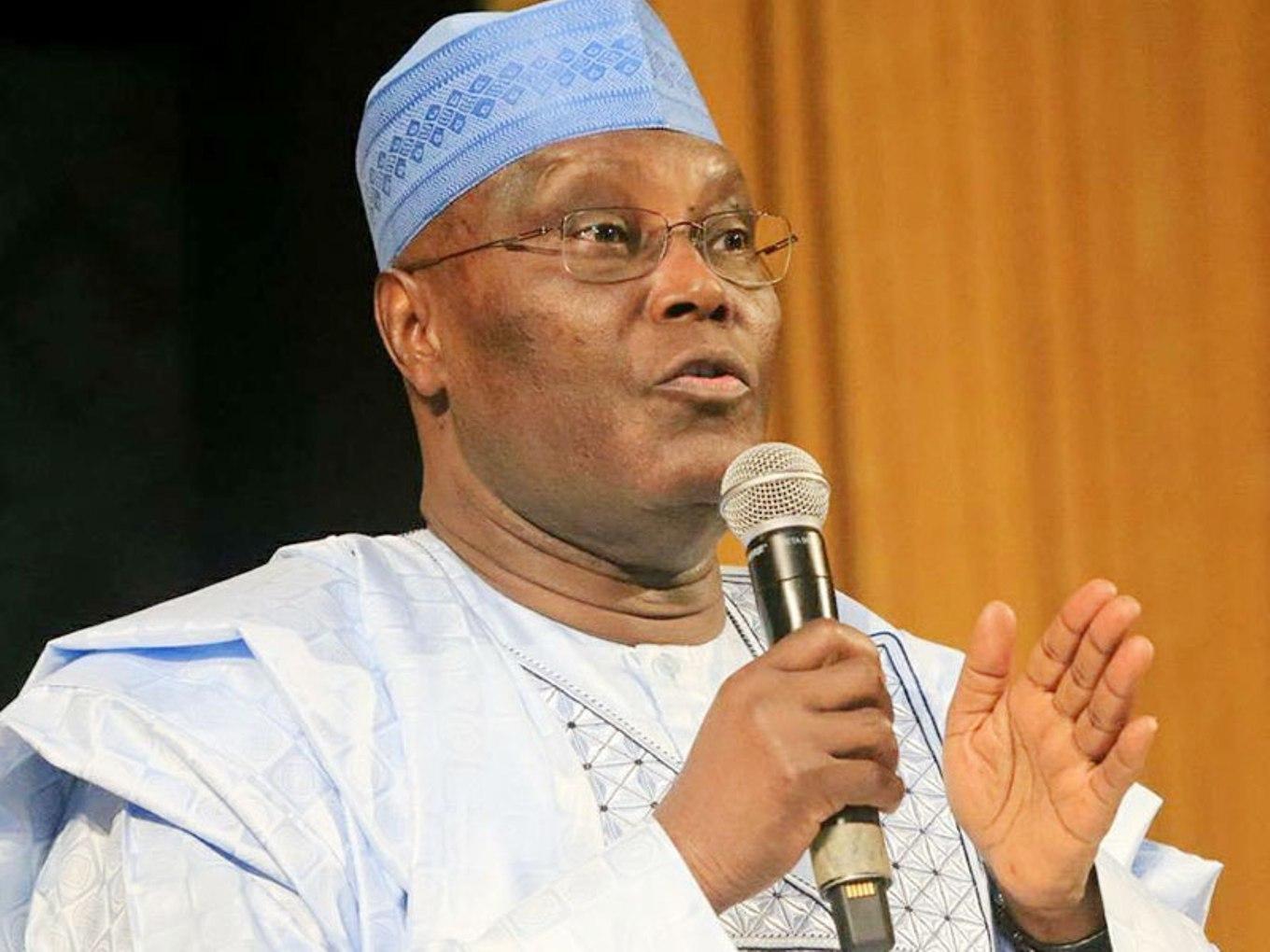
The statement made by Alhaji Atiku Abubakar, a leading presidential figure on the platform of the opposition coalition party, African Democratic Congress (ADC), in the interview he granted to Charles Aniagolu on Arise television offers a useful entry point into this problem. Questioned by Aniagolu, he said, “I am more popular than Kwankwaso, El-Rufai, and Tambuwal in the North. Kwankwaso’s popularity is restricted to only Kano State. Kano is even now split between him and Governor Abba Yusuf”.
On the surface, this may appear to be ordinary political messaging. Aspirants often assert superiority over rivals. They compare reach, influence, and electoral weight. That is part of democratic contestation. But, beneath this familiar surface lies a deeper problem. It is not what was said alone, but the mode of thinking that produces such a statement, especially within a coalition context where political survival depends on careful alliance building, mutual respect, and disciplined speech.
The first issue here is strategic.
An opposition coalition party is not a smug place for diminishing allies. It is a political arrangement built on negotiated interests, shared strengths and weaknesses, and converging political ambitions. So to publicly cocoon opposition coalition allies within regional boundaries or reduce them to electoral fragmentation is not only undiplomatic, it is also structurally incoherent. Such a statement misunderstands the grammar of coalition politics, particularly where strengths are summed up through addition, not subtraction. When political allies agree to form a coalition party, they no longer speak as solitary competitors in the market of individual popularity. The logic changes. Dramatically. The language must change with it as well. The task, therefore, becomes one of enlarging the symbolic and electoral capital of the coalition; and not narrowing the perceived value of its parts. Anything less amounts to a confusion of individual campaign rhetoric with the demands of coalition statecraft.
This brings us to the deeper concern, which is the problem of abecedarian politics.
Abecedarian politics is politics at its most elementary level of reasoning. It is political thought that remains at the stage of hubris, slogans, rankings, and surface comparisons. It counts strength as arithmetic, measures influence as geography, and reduces complex political formations into simple hierarchies of popularity. Atiku’s statement reflects precisely this mode of reasoning. It treats political allies as isolated units of popularity rather than as embedded nodes within party political structures. It assumes that political value can be measured in simple comparative terms, as if the North is a single space that yields a uniform verdict on leadership.
This is not analysis. It is simply hubris.
Abecedarian politics is dangerous not because it is loud, but because it is extremely shallow. It gives the impression of clarity while actually making light of complexity. It speaks in the language of certainty but ignores the texture of uncertainty that defines real electoral landscapes. No serious opposition coalition party can be assessed on the logic of exclusivity and reduction that such statements promote. There is also what may be described as a boy scout error in political communication here. This is the tendency to speak with unnecessary bluntness in contexts that demand strategic restraint. Politics is not a seminar room where every thought must be spoken as it is formed. It is a playing field where perception is often as important as arithmetic. Publicly diminishing allies weakens the very edifice that sustains opposition coalition.
An opposition coalition party is sustained not only by agreements and consensus but by continuous acts of reassurance in speeches and conducts. Every public statement either reinforces trust or erodes it. When a leading figure in a coalition describes an ally as geographically limited in influence, it sends signals beyond the immediate audience. It tells allies that their value is conditional and their relevance is subject to public ranking. That is not how durable political alliances are maintained.
There is a further consequence.
Political discourse in a country already burdened by simplistic interpretations of leadership becomes even more impoverished when leading political figures themselves adopt abecedarian frames. When elites reduce politics to popularity contests among individuals, they reinforce a culture in which institutions, policies, and governance outcomes recede into the background. Citizens are then encouraged to think of leadership not as a question of capacity or vision but as a contest of personalities. The irony is that the politics of opposition coalition party demands the opposite. It requires sophistication, patience, and an appreciation of political interdependence. It demands the ability to hold contradictions without rushing to resolve them through public ranking. It requires speeches that build bridges rather than measurements that divide.
What is required is not merely about one statement. It is about the style of political reasoning it represents. If opposition coalition party is to succeed, its leading figures must move beyond abecedarian habits of thoughts. It must resist the temptation to speak in terms of simple hierarchies and instead embrace the complexity of shared political projects. Political language becomes too elementary for the complexity it seeks to govern.
Coalition politics depends on restraint in speeches, discipline in judgments, and a cultivated awareness that political allies are not objects of public comparison but allies in negotiated survival. When allies speak as though popularity can be measured like a simple scorecard, they diminish the very basis upon which democratic cooperation can be built. Serious opposition coalition politics demands an appreciation that influence is layered, uneven, and often invisible at the moment it is proclaimed.
What endures is not the noise of assertion, but the patient work of building trust, where words, carefully chosen, sustain the delicate framework of alliance and cooperation. Such discipline restores seriousness to political speeches and elevates public discourse to a plane where arguments displace insults and reasoning rises above crude ranking. It affirms that language does more than convey thought; it shapes the trust upon which collective political endeavours depend. This is the central implication of Atiku’s abecedarian politics and the limits of hubris: when speeches are stripped of discipline and depth, hubris displaces humility, opposition coalition politics descends into schoolboy contests of assertion and counter-assertion, and party solidarity pays the price.