

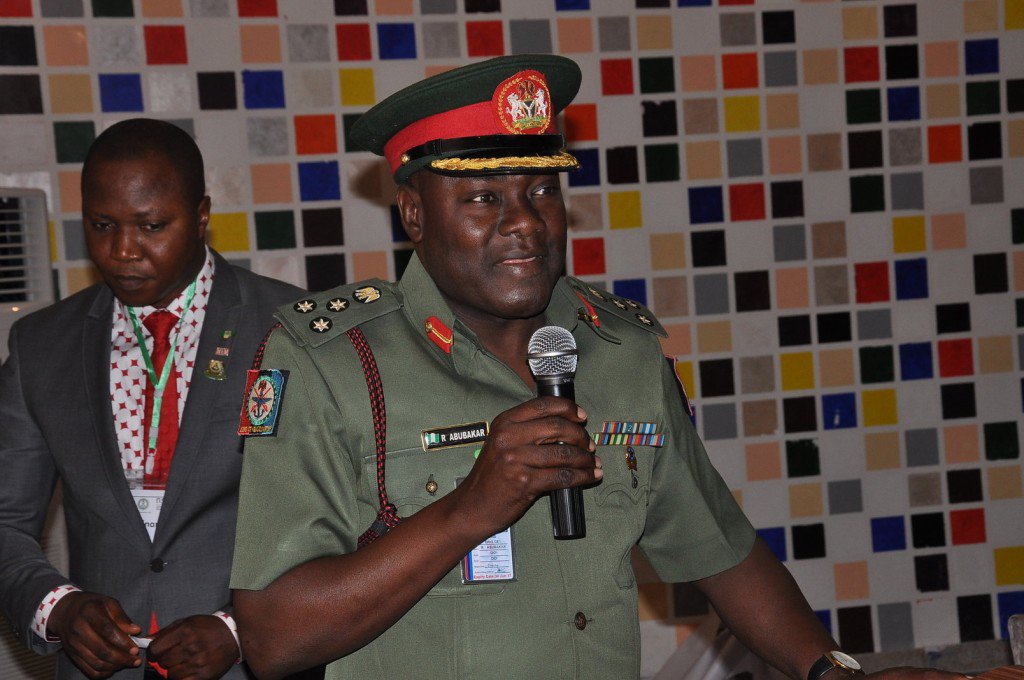
The kidnapping and death of retired Major General Rabe Abu Bakr has once again forced Nigeria to confront a deeply troubling question: if senior military officers are no longer safe, what does that mean for ordinary citizens?
In this episode of The Other Side, hosted by Rimamnde Shawulu Kwewum, we examine the growing pattern of attacks against Nigeria’s military personnel, including retired generals, senior commanders, and officers who once stood at the forefront of the country’s security operations.
For decades, Nigerians have looked to the military as the ultimate line of defense against terrorism, insurgency, banditry, kidnapping, and organized criminal violence. Yet recent events suggest that those entrusted with protecting the nation have increasingly become targets themselves.
The death of Major General Rabe Abu Bakr after reportedly being abducted alongside his wife in Katsina State raises uncomfortable but necessary questions about the changing nature of insecurity in Nigeria. What does it mean when individuals with decades of military training, operational experience, and battlefield knowledge become vulnerable to the same criminal networks threatening ordinary citizens?
This documentary explores how Nigeria’s security landscape has evolved over the last two decades. From the emergence of Boko Haram and ISWAP to the rise of heavily armed bandit groups and kidnapping syndicates, the country has witnessed a dramatic transformation in the scale, sophistication, and geographical spread of violence.
The discussion traces the expansion of insecurity across regions including the North-East, North-West, North-Central, and parts of Southern Nigeria. Communities have been displaced, farms abandoned, schools attacked, and economic activities disrupted. Millions of Nigerians now live under varying levels of security uncertainty.
A key focus of this episode is the increasing vulnerability of senior military officers and retired personnel. We examine previous incidents involving high-ranking officers, the strategic implications of losing experienced military leaders, and the impact such attacks have on public confidence in national security institutions.
The programme also analyzes how criminal and terrorist organizations have evolved. Armed groups now employ more sophisticated tactics, including surveillance technologies, advanced communications systems, improvised explosive devices, and increasingly complex operational networks. As these threats continue to evolve, an important question emerges: is Nigeria’s security architecture adapting quickly enough to meet the challenge?
Beyond military operations, this episode examines broader issues including intelligence gathering, community cooperation, border security, youth unemployment, weapons trafficking, governance challenges, and the role of public trust in combating insecurity.
For younger Nigerians, especially members of Gen Z, insecurity has become a constant feature of national life. Many have grown up hearing stories of kidnappings, terrorist attacks, school abductions, communal violence, and attacks on communities. This raises important questions about how a generation shaped by insecurity views the future of the country.
The programme further explores whether peace agreements between communities and armed groups provide genuine solutions or merely create temporary pauses that allow criminal networks to regroup and expand their operations elsewhere.
Most importantly, this episode reminds us that security is not merely a military issue. It affects education, agriculture, investment, healthcare, governance, and the daily lives of millions of citizens. The targeting of military officers is ultimately not just a military story—it is a national story about the safety, stability, and future of Nigeria itself.
As Nigeria continues to search for solutions, difficult questions remain:
• Can intelligence systems be strengthened?
• Are security agencies receiving adequate resources and technology?
• How can communities contribute to early warning systems?
• What role should political leadership play in restoring public confidence?
• Can Nigeria build a future where neither generals nor ordinary citizens live in fear?
Join us as we examine the facts, challenge assumptions, and explore what these developments mean for Nigeria’s future.
Share your views in the comments section:
What do you believe is the biggest obstacle to improving security in Nigeria today?
If you find this analysis valuable, please like, share, and subscribe.
🔔 Subscribe for weekly insights on Nigeria’s politics, security, governance, and democracy.
Hosted by Rimamnde Shawulu Kwewum.
The Other Side — Fact-Based Conversations That Matter.
🔔 Subscribe for weekly insights on Nigeria’s politics and democracy.