
From Adeleke’s re-election to Tinubu’s Uyo shuffle, politicians are dancing their way across the 2027 campaign. The evidence on whether it wins votes is mixed, and the clips leave out a lot.
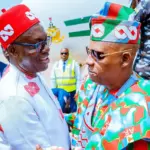
Dance has become one of the most visible features of Nigeria’s 2027 campaign season. From the president and vice president to governors and senators, politicians are performing at rallies, and the clips spread nationwide within hours.
Political analyst Rimamnde Shawulu argues that the habit itself is not new. “What has changed is who is watching,” he said in a new episode titled Dancing to Victory. “A rally used to reach a stadium. A clip now reaches the whole country.”
The clearest test of whether dancing helps or hurts came in Osun State. At an All Progressives Congress (APC) rally on 6 August, Edo State Governor Monday Okpebholo made Governor Ademola Adeleke’s dancing the centre of his attack, claiming the governor danced instead of governing and rarely attended governors’ meetings in Abuja. Adeleke replied on 11 August that nobody would stop him dancing and that his critics were jealous.
On 15 August, Adeleke, contesting on the platform of the Accord Party, defeated the APC’s Bola Oyebamiji by 66,252 votes and won 19 of the state’s 30 local government areas. It was Accord’s first governorship victory anywhere in Nigeria.
“The opposition explicitly made dancing an issue, and the dancer still won,” Shawulu said. “But there is no evidence that he won because he danced.”
Since then, the dancing has spread across the presidential campaign. Vice-President Kashim Shettima drew attention at a 2 November rally in Calabar, which was also criticised online for its turnout. President Bola Tinubu danced at rallies in Uyo on 6 November and in Dutse, Jigawa State, on 10 November.
Shawulu pointed to what the Uyo clips did not show. At the same rally, Tinubu approved the long-awaited Ibom Deep Seaport from the campaign stage after Governor Umo Eno pledged two million votes for his re-election. The Federal Executive Council under former President Muhammadu Buhari had approved the project’s commencement in December 2020. “The issue is not the approval,” Shawulu said. “The issue is whether it will be executed.” On the same day, a bus carrying APC women to the rally crashed in Uyo, killing one person and injuring others.
International experience offers no clear rule. Donald Trump in the United States and Prabowo Subianto in Indonesia won after making dance part of their campaigns. In South Africa, Cyril Ramaphosa danced through two campaigns, but the ANC lost its parliamentary majority in 2024. Kenya’s Raila Odinga danced at rallies and still lost.
Research on campaign communication suggests that appeals generating enthusiasm mainly mobilise existing supporters rather than win over opponents. Studies of humour and informality find that their effects on vote intention are small compared with party loyalty.
“Dancing and substance are not opposites,” Shawulu said. “The danger is that for most voters, the dance is the only part of the rally that reaches them.”