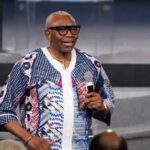
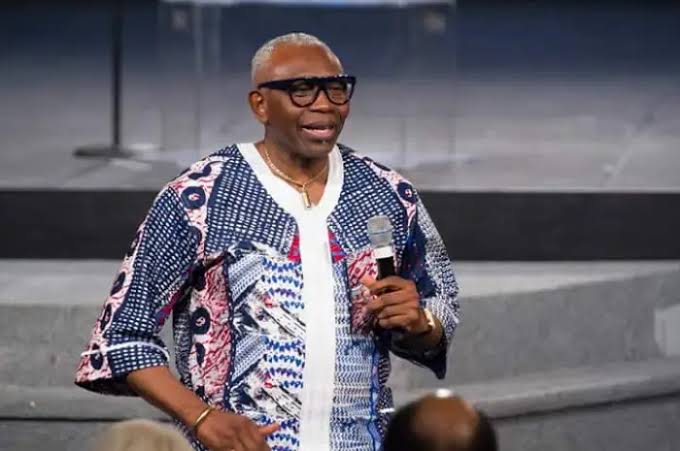
Pastor Ayo Oritsejafor, founder of the Word of Life ministry and a former President of the Christian Association of Nigeria (CAN), is an exceptional man of God and respected elder statesman whose contributions to Nigeria’s spiritual and national life have remained significant.
He is a man whose life bears testimony to the transforming power of faith.
Oritsejafor has spent more than five decades preaching the Gospel, building a global ministry, empowering the poor and speaking boldly on issues affecting the Church and the nation.
On November 10, 2026, marked his birthday.
His early years were far from the comfortable. His father died when he was very young, leaving with his mother who subsequently remarried.
His childhood had an unusual spiritual dimension.
According to his recollection, he did not speak until he was five years old. His great-grandmother, a deeply religious woman, frequently took him to church and placed him at the altar, believing that God would intervene in his condition.
She was particularly convinced that he would one day become a preacher.
That conviction eventually became a reality in 1972 when he had a dramatic encounter with God during a crusade held in Sapele, Delta state.
It was st the crusade that Oritsejafor experienced what he described “as a miraculous encounter with God and surrendered” his life to Jesus Christ.
That was the beginning of a new chapter in his life.
He was conscious of a divine calling to preach the Gospel and committed himself to preparing for the ministry.
He started his theological trailing at the All Nations For Christ Bible Institute, Benin City,
He also studied at the Nigerian Baptist Seminary, Ogbomoso, Oyo State, and later proceeded to the United States in 1979 for further training at Morris Cerullo’s School of Ministry in San Diego, California.
In an interview with a national daily, Oritsejafor said, it was during his days at the Bible college that he received a vision of himself preaching to large crowds across the world.
To him, the vision was a divine instruction to take the Gospel beyond geographical boundaries.
That vision became the driving force behind a ministry that would eventually reach many people across continents.
Oritsejafor served under the late Archbishop Benson Idahosa, one of Nigeria’s foremost Pentecostal leaders and founder of Church of God Mission International.
His association with Idahosa provided an important foundation for his development as a preacher and evangelist.
In November 1987, he founded the Word of Life Bible Church in Warri, Delta State.
Today, the church has grown into a major Pentecostal ministry with local and international influence.
The establishment of the church marked the beginning of a wider vision for evangelism.
He was among the few men of God who sought to use high-tech communication platforms to take the Gospel into homes and communities across the world.
In 1980, he launched the television programme, “Hour of Deliverance,” which became one of the prominent Christian television programmes at the time.
The programme brought his energetic preaching and emphasis on salvation, healing, and deliverance to a much wider audience.
In 1987, his His ministry, in collaboration with Evangelist Joe Martins, pioneered the use of satellite television to transmit the Lagos Miracle Crusade to audiences beyond Africa.
He subsequently established the African Broadcasting Network (ABN), an international Christian television platform designed to promote evangelism and make Christian teachings accessible to audiences across different countries.
Through his annual Jubilee Word Festival, he has continued to attract prominent ministers from Nigeria and other parts of the world to Warri.
The programme has become an important platform for spiritual revival, Christian fellowship, and the development of younger ministers.
He has travelled to many countries to preached at crusades, conferences, and other Christian gatherings.
His emphasis on salvation, healing, deliverance, and the demonstration of God’s power has remained central to his preaching.
One of the most remarkable dimensions of Oritsejafor’s ministry is his commitment to improving the economic conditions of the less privileged.
For him, preaching the Gospel must go beyond winning souls to addressing the practical challenges confronting people, especially less privileged people struggling to survive.
In 2005, together with his wife, Pastor Helen, they established an annual poverty alleviation and empowerment programme through a partnership with a Microfinance Bank.
Through the programme, the church distributed cars, minibuses, tricycles, motorcycles, grinding machines, sewing machines, and other equipment to hundreds of beneficiaries to
enable them to establish businesses and improve their living conditions.
The initiative has been extended beyond members of his church to accommodate people from different religious, ethnic and social backgrounds.
He has consistently maintained that “the Gospel must address both the spiritual and physical needs of humanity.”
His approach is rooted in the biblical example of Jesus Christ, who not only preached to the multitudes but also provided for their physical needs.
This philosophy is captured in the mission of Word of Life Bible Church: “building and equipping the people who build the nation.”
One of the most defining chapters in Oritsejafor’s public ministry was his emergence as President of the Pentecostal Fellowship of Nigeria (PFN) 2005 and his election as the President of the Christian Association of Nigeria (CAN).
Oritsejafor served two terms as President of CAN from 2010 to 2016.
His six-year tenure was marked by a strong emphasis on Christian unity, religious freedom, national security, and the protection of the rights of Christians.
His leadership of the christian body was during a period of considerable national anxiety, particularly with the escalation of the Boko Haram insurgency in the North-East and attacks on Christian communities in different parts of the country
Oritsejafor was very outspoken on issues of insecurity and religious persecution and consistently challenged government over its responsibility to protect lives and property, insisting that the sanctity of human life should not be compromised by religious or political considerations.
As President of CAN, he was assertive and engaged with government and other institutions of authority on how to address the challenges facing the nation.
He was not a leader who confined his responsibilities to issuing religious statements or organising Christian gatherings.
He believed that the Church had a responsibility to speak on matters affecting the welfare, security, and future of the country.
Although his positions sometimes attracted criticism and controversy, he is rated as one of the strong voices in Nigeria’s religious and public affairs.
He maintained that the Church should not remain silent when citizens were exposed to injustice, violence, and discrimination.
One of his remarkable achievements as CAN President is the construction of
the Jubilee Centre at the
National Christian Centre, Abuja.
The 50 bedroom structure
with a large conference hall was commissioned by then President Goodluck Jonathan in 2015.
The hotel is a source of
revenue to CAN.
Another important aspect of Oritsejafor’s ministry has been his humanitarian involvement, particularly in responding to the plight of vulnerable communities.
During the Boko Haram insurgency, he visited affected communities in the North-East, including Maiduguri, and facilitated the provision of food, clothing, and other relief materials to victims of the violence
He also extended assistance to communities affected by natural disasters, including the devastating floods that ravaged parts of Sokoto State in 2012.
These interventions reflected his understanding of Christian ministry as something that must extend beyond preaching to meeting the material needs of people.
Through the church and associated humanitarian initiatives, he and his wife, Helen, have supported educational scholarships and empowerment programmes for disadvantaged people.
His commitment to national development has also been reflected in his involvement in efforts that led to the resolution of the Niger Delta conflicts.
These efforts underscore his belief that religious leaders have an important role to play in promoting peace, reconciliation, and national stability.
Oritsejafor’s journey has not been without challenges. Like many public figures, his ministry and public engagements have attracted both admiration and criticism.
For more than five decades, he has remained committed to the ministry of the Gospel, building institutions, mentoring ministers, supporting humanitarian causes, and using his voice to engage issues of national importance.
As he marks another birthday, the celebration should, therefore, go beyond the customary exchange of goodwill messages.
It should be an occasion to recognise a life of service, the sacrifices made in the course of ministry, and the enduring influence of a man whose journey has touched the Church and the wider Nigerian society.
Pastor Ayo Oritsejafor’s place in the history of contemporary Nigerian Christianity is assured. His years of ministry, leadership of CAN, and contribution to the advancement of the Gospel constitute an important part of that history.