

By Shu’aibu Usman Leman
Recently, a colleague in the media remarked in frustration that democracy in Nigeria has become a scam.
It was a harsh statement, but one that reflects the growing anger and disappointment felt by millions of Nigerians who increasingly believe that the system is no longer working for the ordinary citizen. That frustration stems largely from the exploitative and deeply unequal political order we have created, a harsh and almost Shylockian system that appears designed to benefit a privileged few at the expense of the majority.
These concerns are not new, and neither is my decision to continue speaking about them.
Over the years, I have written repeatedly about the culture of impunity in governance, the dangerous commercialisation of politics, the steady erosion of institutional integrity, and the widening disconnect between leadership and the suffering mass I intend to continue raising these issues for as long as they persist because the normalisation of dysfunction should never be met with silence.
When corruption becomes systemic, accountability weakens, and public trust deteriorates, consistent public engagement becomes not merely an intellectual exercise but a civic responsibility. Repetition, in this context, is necessary to keep national attention focused on the urgent need for reform, justice, and responsible democratic governance.
Twenty-five years after the return to civil rule in 1999, many Nigerians are still waiting for the true dividends of democracy.
While no serious observer expects perfection within such a relatively short period, citizens are justified in expecting a far more functional and accountable system than what currently exists.
Democracy was meant to improve lives, strengthen institutions, and create opportunities for collective progress. Instead, many Nigerians feel trapped in a cycle of poverty, insecurity, corruption, and hopelessness.
The greatest tragedy of Nigeria’s democratic experience is the gradual transformation of politics into a lucrative commercial enterprise.
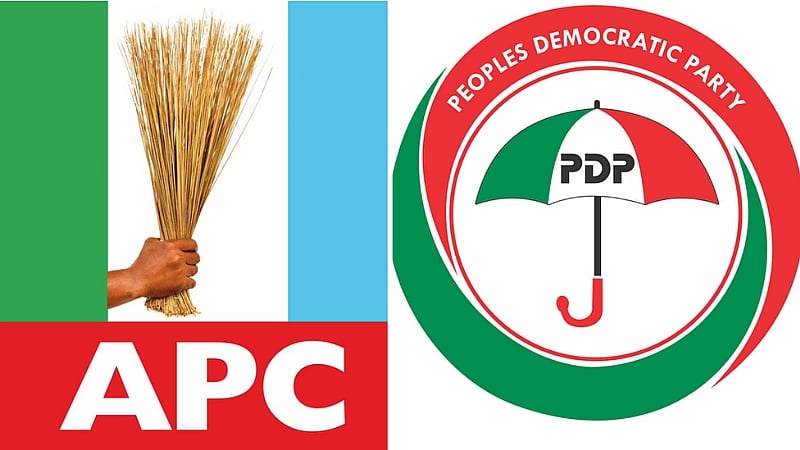
Public office, which ought to symbolise sacrifice and service, is now widely viewed as the quickest route to wealth and influence. Political parties have largely abandoned ideology and principle, functioning instead as platforms for capturing power and distributing patronage.
This commercialisation of politics has produced a dangerous culture in which elections are treated as investments. Political godfathers and wealthy financiers pour huge sums into campaigns with the expectation of enormous returns once their candidates assume office.
Contracts, appointments, access to state resources, and protection from accountability become the dividends of political investment. In such an environment, governance inevitably suffers.
Across the country, Nigerians continue to witness individuals from humble backgrounds suddenly transform into owners of extraordinary wealth shortly after occupying public office.
Without any visible business enterprise or record of productive innovation, some public officials acquire luxury estates, expensive vehicles, and immense influence within remarkably short periods. Such developments naturally provoke public suspicion and deepen the perception that politics has become a gateway to personal enrichment.
The consequences of this reality are devastating. When politics becomes more profitable than productivity, society gradually loses faith in hard work, education, and enterprise.
Many young Nigerians now believe that political connections offer greater rewards than professional excellence or honest labour. This shift in values weakens both the moral and economic foundations of the nation.
As Nigeria approaches another electoral cycle in 2027, the political atmosphere has become increasingly toxic.
The democratic space is being polluted by impunity, intimidation, and the systematic weakening of political opposition.
Induced defections and the erosion of alternative political voices raise legitimate concerns about the future of democratic pluralism in the country.
A healthy democracy requires competition, accountability, and genuine political alternatives. Where opposition parties are deliberately weakened and political dominance becomes excessive, citizens begin to lose confidence that elections can produce meaningful change. Democracy then risks becoming little more than a ceremonial exercise designed to legitimise predetermined outcomes.
Although certain electoral reforms have introduced technological innovations, public trust in the electoral process remains fragile. Questions surrounding transparency, institutional neutrality, and the independence of critical democratic institutions continue to generate widespread concern. Democracy cannot flourish where citizens doubt the integrity of the process itself.
Equally troubling is the perception that some institutions responsible for safeguarding democracy have become compromised by political influence.
Whether in the conduct of elections, the enforcement of laws, or the resolution of disputes, many Nigerians increasingly fear that justice and accountability are often selective.
The effects of governance failure are visible across every sector of national life. Millions of citizens continue to struggle with rising inflation, unemployment, insecurity, failing infrastructure, and declining living standards.
At the same time, a small political elite continues to accumulate extraordinary wealth amid widespread hardship.
Every stolen or mismanaged public fund represents abandoned schools, poorly equipped hospitals, broken roads, and lost economic opportunities. Corruption is, therefore, not merely a financial crime. It is an assault on the dignity and future of ordinary Nigerians who rely on public institutions for survival and opportunity.
The culture of impunity has further weakened confidence in governance. Investigations into corruption are often announced with great publicity, yet convictions remain limited and accountability inconsistent. Many citizens now believe that powerful individuals can manipulate institutions to escape justice while ordinary citizens suffer the full consequences of the law.
No democracy can thrive where accountability is selective. Respect for the rule of law must apply equally to all citizens regardless of status, influence, or political affiliation. Without fairness and transparency, democratic legitimacy gradually erodes.
Yet despite these frustrations, abandoning democracy is not the answer. Nigeria’s problem is not democracy itself, but the manner in which democratic structures have been manipulated and captured by self-serving interests.
The task before Nigerians is, therefore, not to reject democracy but to reclaim it.
What Nigeria requires is deeper and more responsible democratic governance. Electoral integrity must be strengthened, oversight institutions must operate independently, anti corruption agencies must function without political interference, and the judiciary must remain courageous and impartial in the defence of justice.
The media and civil society also have a critical responsibility to hold power accountable. Press freedom must be protected, and citizens must continue to demand transparency from those entrusted with public office. Democracy cannot survive where silence replaces civic engagement.
Equally important is the need for moral and cultural renewal. Nigerians must stop glorifying unexplained wealth and begin celebrating integrity, hard work, and genuine public service.
A society that normalises sudden riches without scrutiny weakens its own ethical foundations and encourages further corruption.
After twenty five years of uninterrupted democratic rule, Nigerians are not demanding miracles. They are demanding leadership that is honest, institutions that function effectively, and governance that prioritises public welfare over elite accumulation. These are not unreasonable expectations.
For me, democracy must work for the people rather than for a privileged minority. Political office must once again become a platform for service rather than a mechanism for private enrichment. The democratic space must be reclaimed from the politics of impunity if Nigeria is to fulfil the promise that inspired the return to civil rule in 1999.
The frustration expressed by many Nigerians today is therefore understandable. But frustration must also become the foundation for reform, accountability, and national renewal.
The republic can still be reclaimed if leadership, institutions, and citizens collectively choose principles over impunity and service over self-interest.
Leman is a former National Secretary of the Nigeria Union of Journalists (NUJ).