


By Shu’aibu Usman Leman
Nigeria is confronting one of the gravest humanitarian crises in its recent history, as the displacement of millions of citizens continues to erode the social and economic fabric of the nation.
Far from being a mere statistic, the scale of displacement underscores the collapse of communities, the loss of livelihoods, and the profound disruption of lives across the country.
Recent estimates put the number of internally displaced persons at over 3.7 million.
This figure is not just data, but a stark national warning that calls for urgent and decisive action by government at all levels, as well as the broader society.
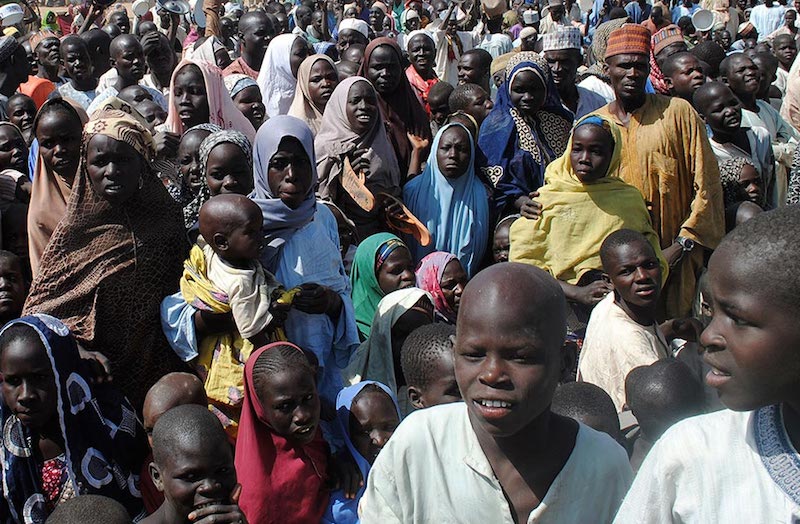
Behind the numbers are families stripped of everything familiar. Entire communities have been uprooted by violence, forcing residents to abandon homes, farms, and businesses in search of safety within their own country.
The burden of displacement is borne disproportionately by the most vulnerable, particularly children.
Those who should be in classrooms and playgrounds now find themselves growing up in temporary shelters where stability is elusive and opportunities are limited.
For many of these children, the prospect of a permanent home remains uncertain.
Their formative years are defined not by education and security, but by overcrowded camps and environments shaped by hardship and deprivation.
Parents in displacement camps face relentless challenges in meeting basic needs.
Access to food, clean water, and shelter has become a daily struggle, underscoring the depth of the humanitarian emergency.
The drivers of this crisis are complex and interconnected.
For more than a decade, the Boko Haram insurgency has destabilised large parts of the North East, displacing millions and leaving once thriving communities deserted.
Yet insurgency alone does not explain the scale of the crisis. Across various regions, communal conflicts over land and resources, often intensified by ethnic and religious tensions, have forced many more Nigerians from their homes.
In the Middle Belt, cycles of retaliatory violence have become increasingly frequent, transforming areas once regarded as the country’s agricultural backbone into zones of persistent insecurity and disruption.
Environmental pressures have further compounded the crisis. The impact of climate change, reflected in intensified flooding and advancing desertification, continues to undermine traditional livelihoods.
As fertile land becomes increasingly scarce, competition between farmers and pastoralists has escalated. Disputes over grazing routes and water resources often degenerate into violent confrontations, leading to further displacement.
Conditions in internally displaced persons camps remain dire. Food shortages are widespread, while limited access to healthcare exposes many to disease and malnutrition.
Education for displaced children is irregular and, in many cases, nonexistent. Without sustained access to schooling, an entire generation risks being denied the skills and opportunities necessary for national development.
Beyond the material hardships lies a significant psychological burden. Many displaced persons have witnessed violence, lost loved ones, and endured the trauma of sudden and forced upheaval.
Despite the magnitude of the crisis, humanitarian responses have remained insufficient.
Aid organisations continue to grapple with funding constraints, insecurity, and logistical challenges that hinder effective service delivery.
In some instances, entire communities remain cut off from assistance due to poor infrastructure and restricted access, leaving thousands without adequate support.
Although the federal government has initiated various interventions, coordination among federal, state, and local authorities remains weak. This lack of synergy often results in fragmented and less effective responses.
While emergency assistance is critical, it is not a substitute for long-term solutions. Temporary shelters and food relief address immediate needs but fall short of ensuring sustainable recovery and stability.
A comprehensive response must prioritise the safe, voluntary, and dignified return of displaced persons to their communities.
This will require rebuilding homes, restoring livelihoods, and fostering trust among affected populations.
Nigeria must confront this challenge with resolve, coordination, and compassion.
Only through sustained commitment by government, communities, and international partners can displaced citizens rebuild their lives and return home with dignity.