





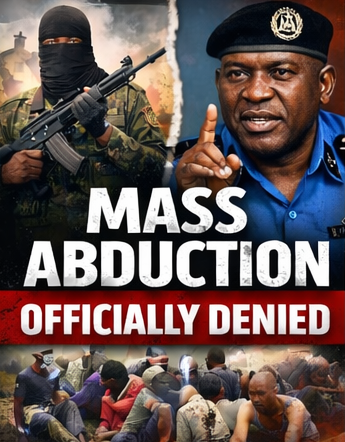
The most critical domestic security concern this week centers on Kaduna State, where reports emerged of a coordinated mass abduction targeting Christian worshippers in Kurmin Waje village, Afogo Ward, Kajuru Local Government Area. According to eyewitnesses and local representatives, heavily armed attackers stormed three churches during Sunday services and abducted congregants into nearby forests.
Initial reports indicated that up to 177 people were taken from the Evangelical Church Winning All (ECWA) church and two Cherubim and Seraphim churches. Some elderly captives and persons living with disabilities were later released, while a small number reportedly escaped. Even with these releases, the scale of the incident was described by a member of the Kaduna State House of Assembly as unprecedented in the area.
Eyewitness accounts described the attackers as arriving around mid-morning, armed and organized, some wearing black clothing and others dressed in what appeared to be military camouflage. The abductors allegedly split into groups, targeting multiple churches simultaneously — a tactic that suggests planning and familiarity with the terrain.
However, within 24 hours, the Kaduna State Police Command publicly denied that any kidnapping had occurred. The Commissioner of Police dismissed the reports as falsehoods allegedly spread by “conflict entrepreneurs,” challenged the public to produce a list of victims, and warned against what he described as rumor-mongering capable of destabilizing the state. The chairman of Kajuru Local Government echoed this denial, stating that visits to the community revealed no evidence of an attack.
This sharp contradiction — between eyewitness testimony, local legislators, and official security statements — has become a defining feature of Nigeria’s recent security landscape.
CIVIL SOCIETY AND ACCESS RESTRICTIONS
Adding another layer to the controversy, Christian Solidarity Worldwide Nigeria (CSWN) reported that its team attempted to access Kurmin Waje to independently verify events but was stopped by military personnel enforcing standing orders not to allow entry. According to CSWN, the denial of access occurred shortly after a military convoy, reportedly including local government officials, exited the community.
CSWN maintains that attackers arrived on motorcycles and on foot, abducted worshippers from three churches, and forced them into surrounding bush areas. The organization reported that women, children, and elderly individuals were later released, while others escaped during the chaos.
These restrictions on independent verification have deepened suspicions and intensified concerns about transparency, accountability, and information control during security crises.
NIGER STATE: A PATTERN EMERGES
The Kaduna controversy follows a similar episode in Niger State, where authorities initially denied reports of the mass kidnapping of hundreds of Catholic students. That denial was later reversed when the same government publicly received the freed students, raising fundamental questions about why the incident was dismissed in the first place.
Together, these cases point to a recurring pattern: denial first, admission later, often under public pressure.
STRATEGIC AND HUMANITARIAN IMPLICATIONS
From a security perspective, mass kidnappings conducted in coordinated fashion indicate growing operational confidence among armed groups. From a governance standpoint, repeated denials risk doing lasting damage. When communities believe that authorities are concealing attacks, cooperation with security agencies diminishes, intelligence dries up, and trust collapses.
At the humanitarian level, families of abducted persons are left in uncertainty, while displaced and traumatized communities lose faith in institutions meant to protect them. Internationally, credibility gaps weaken Nigeria’s position as it seeks global support on security, counter-terrorism, and humanitarian relief.
WHY THIS MATTERS
Whether ongoing investigations ultimately confirm or disprove the full scale of the Kaduna incident, the damage caused by contradictory official messaging is already real. Security is not only about military response; it is also about truth, credibility, and public confidence.
As Nigeria remains under increased international scrutiny, the handling of security information may prove as consequential as the attacks themselves.
Subscribe to Security Update for verified weekly reports on Nigeria, Africa, and the world.
Follow the Ndeya Live channel on WhatsApp: https://whatsapp.com/channel/0029Vb75hKu8qIzpCZasbb2Q