


A garrisoned state should not wake up to the disappearance of one hundred and seventy-seven citizens and then drift into equivocation. Kaduna State is one of the most securitised states in Nigeria. Barracks dot its landscape. Checkpoints punctuate everywhere.
Intelligence formations abound. When such a place loses an entire community to abductors, the first duty of the state is fidelity to the truth. What followed the Kurmin Wali, Kajuru abductions was something else.
The police statement now before the public reads like a reluctant confession. First came acknowledgment of public anxiety. Then came a story of dispute at a security council meeting where unnamed persons questioned a report earlier confirmed by the police. Out of the official contradiction emerged a posture of caution. Words were chosen to calm nerves. Truth was exiled. In the end, after days of denial and deliberate hedging, the truth forced its way back into the light. The abduction did occur. One hundred and seventy seven persons were taken from Kurmin Wali, Kajuru.
This sequence matters. Denial came first. Admission followed under pressure. That retreat from an initial posture of disbelief speaks to a deeper malaise. The Nigerian state has developed a reflex of disowning reality whenever reality proves inconvenient. Violence must be minimised. Numbers must be masked. In that space of obfuscation, truth bleeds.
The Commissioner of Police spoke of preventing panic. That explanation sounds reasonable only until one asks who benefits from panic management that suppresses fact. Fear thrives on uncertainty, not on truth. Communities panic more when they sense that officials are withholding information. Families panic when their loved ones vanish and the state responds with ambivalence. The refusal to speak plainly does not calm. It corrodes trust. But, Kaduna State did not tip-toe into this crisis. The abduction of one hundred and seventy-seven people in a single sweep required logistics, planning, intelligence, and time. Such an operation could not unfold without movement across roads and terrain watched by security forces. The question that hangs heavy in the air concerns resistance.
How did such a large number get taken without confrontation? How did they disappear without alarm? Silence from security services on these points deepens public suspicion. And rightly so, as officialdom took its time to summon the courage to admit the facts. But a citizen-journalist did so with courage. Steven Kefas broke the story while denial still held sway. He went beyond announcing figures. He published names. Across several platforms, he insisted that the abductions had taken place. In doing so, he discharged a civic duty the state hesitated to perform. The distance between his certainty and official doubt reveals where truth now resides in Nigeria. Often, it lives with citizens who have no uniforms and no podiums.
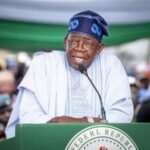
This inversion of credibility did not begin with Kajuru. Under Tinubu’s rulership, denial has become a directive and governing principle. From economic hardship to security failures, the first response has been to contest lived experience. Inflation figures are contested while inflation empties pockets in real terms. Hunger is debated while households skip meals. Insecurity is reframed while communities bury their dead. Power speaks in abstractions, while hunger is hung like scarlet letters around the necks of citizens. Denial follows a pattern. First, reality is questioned.
Then messengers are discredited. After that, a partial admission appears when denial becomes untenable. Finally, the state demands gratitude for conceding what everyone already knows. This cycle erodes moral authority. Governance turns into public relations. Truth becomes negotiable. The Kurmin Wali, Kajuru episode exposes another dimension of this culture. Truth is not merely delayed. Truth is purloined. Facts are lifted from their proper owners, the victims, and handled as contraband. They are released only when convenient. In this trade, conscience has a price. Those who ought to speak plainly calculate optics. Mammon dictates tone. The suffering of ordinary people becomes mere collateral in the war to protect narratives.
The police statement speaks of misinterpretation. That word does heavy lifting. Misinterpretation suggests excess zeal on the part of the audience rather than failure on the part of authority. The public did not misinterpret denial. The public heard denial. When officials say reports are false or disputed, citizens understand the plain meaning. Backtracking cannot erase that memory. There are consequences to this style of governance. Communities stop reporting crimes promptly because they fear disbelief. Citizens turn to social media as primary sources because official channels lack credibility. Rumour flourishes where transparency retreats. Security operations suffer because trust has been squandered.
The moral cost is higher. A state that bargains with truth cannot command loyalty. A government that colours facts to suit politics teaches citizens to do the same. Kajuru demands more than belated confirmation. It demands answers. How did the abductors assemble? What routes did they use? Where were the security patrols? What intelligence warnings were missed or ignored? Accountability requires names and timelines. Without these, promises of deployment and patrols sound like ritual incantations.
Nigeria has reached a point where denial no longer buys time. It only buys anger. Citizens are weary of being told that what they see did not happen.
They are tired of watching officials negotiate with obvious facts. The abduction of one hundred and seventy seven people is not a problem of narrativisation, it is a human tragedy. The path to truth must begin with candour. Security agencies must speak as guardians, not as image managers. Political leaders must abandon the comfort of denial and face the discomfort of truth. Only then can trust begin to return. Kurmin Wali, Kajuru stands as a grim reminder. When the state retreats from truth, citizens advance toward despair. When denial becomes policy, insecurity becomes the destiny. Nigeria deserves better than a government that admits reality only after reality echoes back, like an empty chamber.