



By Joseph Kwewum
Zambian referee Janny Sikazwe found himself at the centre of controversy during the 2022 Africa Cup of Nations after prematurely blowing the full-time whistle five minutes before the end of regulation time.
After being persuaded to resume the match, Sikazwe then ended the game again in the 89th minute, effectively concluding the Group F encounter between Mali and Tunisia early — twice.
While Sikazwe’s mistake was particularly egregious, it was far from an isolated incident. Instead, it became the most visible example in a long history of refereeing errors that have consistently undermined the quality and credibility of the Africa Cup of Nations (AFCON).
Referee Janny Sikazwe of Zambia watches the VAR screen during the AFCON 2022 Group F match between Tunisia and Mali at the Limbe Omnisport Stadium in Limbe, Cameroon, on January 12, 2022.
The growing catalogue of officiating blunders paints a troubling picture: at best, systemic incompetence; at worst, deliberate corruption.
For a tournament that is already too often dismissed or denigrated by outsiders, these controversies further erode the enjoyment of both neutral viewers and loyal fans.
A referee’s role is to enforce the laws of the game fairly, consistently, and without bias.
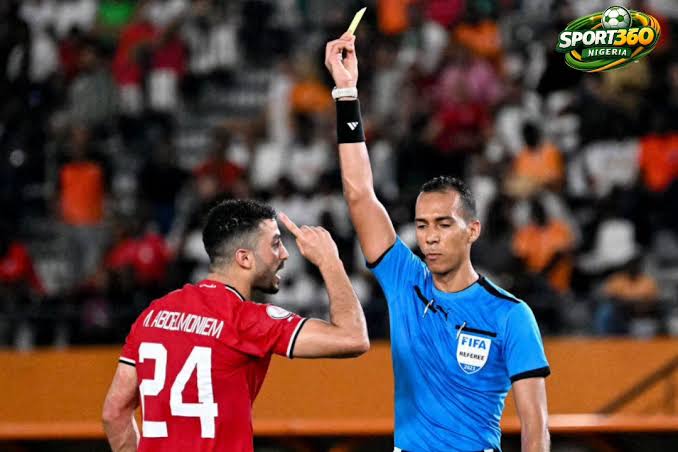
Their presence should reassure players and coaching staff alike. Yet, throughout this AFCON, referees have repeatedly become the focal point of matches for all the wrong reasons.
After nearly every game, members of losing teams , coaches and players alike , have raised concerns about officiating standards.
Multiple national associations have even explored filing formal appeals over refereeing decisions, an alarming sign for any major competition.
Referees should never be the main characters in a football match. They are meant to be an invisible force, facilitating the game rather than defining it. Unfortunately, that ideal has rarely been realised at AFCON tournaments.
History offers plenty of precedent. In 2015, referee Rajindraparsad Seechurn was banned for six months after awarding Equatorial Guinea a highly controversial penalty against Tunisia in the quarter-finals.
The decision sparked chaos, with Tunisian players angrily confronting the official at the final whistle.
Tunisia’s players argue with referee Rajindraparsad Seechurn following their 2–1 quarter-final defeat to Equatorial Guinea.
The frequency of such incidents is damaging to the quality of football on display.
Worse still, many controversial decisions are only addressed retroactively, after tournaments have concluded, leaving fans with a lingering sense of injustice and distrust.
This year’s AFCON has seen several football associations,.including those of Morocco, Algeria, and Cameroon, lodge complaints with Confedertion of African Football (CAF), over refereeing conduct.
Cameroonian FA president Samuel Eto’o was even fined for his public protests following disputed decisions during Cameroon’s match against Morocco.
However, poor refereeing should be viewed as a symptom rather than the root of the problem.
The deeper issue lies in the corruption that continues to plague segments of African football governance, including CAF itself. This corruption manifests not only in questionable officiating, but also in poorly maintained pitches and the practice of host nations accommodating visiting teams in unfavourable conditions to gain a competitive edge, particularly in World Cup qualifiers.
Whether further controversy will emerge in the AFCON final remains to be seen. What is clear, however, is that the spectre of corruption continues to cast a long shadow over African football, leaving its mark on yet another tournament.