


By Joseph Kwewum
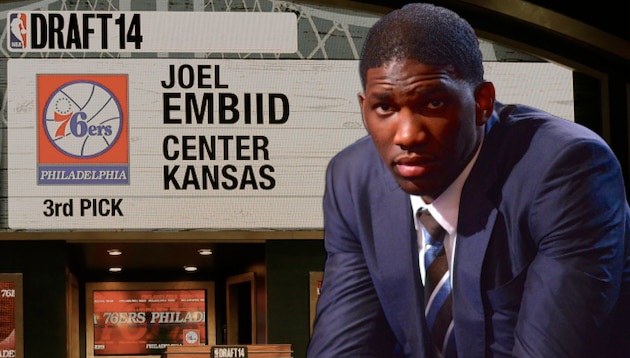
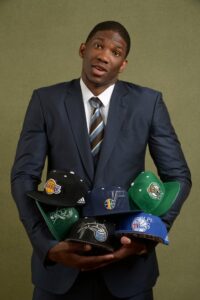
In the 2014 National Basketball Association (NBA) Draft, the Philadelphia 76ers selected Joel Hans Embiid with the third overall pick.
The 7’0”, 280-pound big man quickly became a revelation for a franchise deep into a rebuilding process. Even more exciting was Embiid’s willingness to fully embrace the plan laid out by general manager Sam Hinkie. As fans were urged to “Trust the Process,” Embiid embodied it so completely that he was affectionately nicknamed “The Process” by the Sixers faithful.
Embiid was unable to play during his first few NBA seasons due to recurring injuries dating back to his collegiate days. Still, his off-court personality, constant trolling, and genuine desire to entertain fans helped keep enthusiasm alive. Whether attending other Philadelphia sporting events or engaging fans online, Embiid built a bond with the city long before he stepped onto the court. The fanbase invested in him just as deeply as he invested in them.
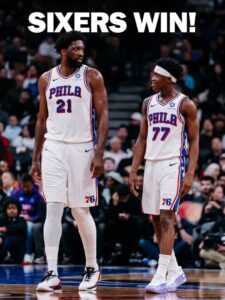
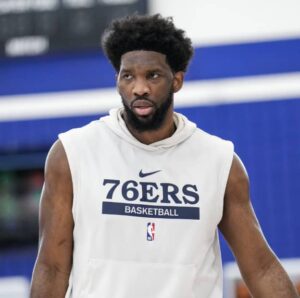
That loyalty was eventually rewarded. Embiid emerged as one of the most dominant players in the league, earning seven All-Star selections, five All NBA honours, and the 2023 NBA Most Valuable Player award. He became the best Sixer since Allen Iverson.
Though towering over opposing centres, Embiid played with the skill of a guard. He defeated defenders with crossovers, pump fakes, spin moves, post ups, hesitations, and off the catch dribbles. He also mastered the art of drawing fouls, consistently putting opposing big men in trouble. Paired with elite defensive intelligence that anchored Philadelphia as a top ten defensive team when healthy, Embiid surpassed all pre draft comparisons and entered a tier reserved for all time greats.
However, not everything was smooth in Philadelphia during Embiid’s early years. While he missed his first two and a half seasons, the Sixers continued to lose, and losing meant high draft picks. The front office understood that Embiid was special and believed those picks could be used to surround him with elite talent.
Yet the team would move forward without Sam Hinkie, the architect of the process. The league took issue with intentional losing and targeted the Sixers, forcing them to build with the assets they already had. Squad building under those circumstances proved far more difficult than expected.
Building a championship calibre team is never easy. Over Embiid’s decade in Philadelphia, many fans have argued that the Sixers were never truly built around him. With the first overall pick in the 2016 NBA Draft, the Sixers selected Ben Simmons, a 6’10” point guard whose play style drew comparisons to Magic Johnson.
Simmons could defend, score, and create at an elite level once he finally reached the court after his own injury issues. When he did play, his talent was undeniable.
One glaring flaw, however, defined Simmons’ tenure. He refused to shoot the basketball. This weakness became devastating in the playoffs, allowing defences to double Embiid and completely clog the paint.
The problem reached its breaking point in the 2021 Eastern Conference Semifinals Game 7 collapse against the Atlanta Hawks, effectively ending the Embiid Simmons partnership. Compounding the issue was poor roster construction, as the Sixers surrounded their stars with non shooters or, at best, league average shooters.
As a result, Embiid was often forced to operate outside the paint, where spacing was slightly better. Simmons thrived in transition as an athletic marvel, but in half court, he was limited by a roster filled with journeymen lacking modern NBA athleticism.
Coaching decisions only worsened the situation. Younger draft picks rarely saw meaningful minutes, and offensive systems failed to emphasize ball movement that could allow Embiid to finish plays more aggressively.
Simmons was not solely responsible for the failures of roster construction. Those issues persisted long after his departure, marked by poor contracts, reluctance to trade, and promising draft picks who were never developed before being moved for minimal returns. The Sixers never truly built with Embiid in mind, and once Simmons left, Embiid was forced to shoulder an enormous offensive burden.
This reflects a broader issue in sports. While Embiid’s supporters believe the front office failed to do justice to the 2023 MVP, similar frustrations exist across nearly every fanbase. Still, the lack of consistent, appropriate support for the Cameroon born superstar has been particularly striking.
In recent years, however, the Sixers have made strides toward correcting course. The rise of Tyrese Maxey, a 6’2” shooting guard turned combo guard, has been transformative. Maxey has quickly developed into an All NBA calibre player. Now, at 31 years old, Embiid is surrounded by a younger, healthier, and more athletic supporting cast than at any previous point in his career.
The 2025 draft selection VJ Edgecombe has emerged as a spark plug, reigniting the offence in fourth quarters with clutch shooting and elite athleticism.
The 2024 draft class has also contributed, with Jared McCain providing high-level shooting when healthy and Adem Bona adding athleticism and defensive energy when Embiid sits.
The Sixers are still not perfect, nor are they as dominant as the league’s top contenders.
Embiid misses more games due to injuries, and the team continues to struggle without him on the floor. Yet, unlike in past seasons, they no longer appear helpless. When Embiid does play, he carries a lighter offensive load, aiding his long-term9 health.
Coaching inconsistencies remain, and the roster could be better optimized around Embiid and Maxey’s strengths.
Even so, for a franchise once stuck between a rock and a hard place, the current Philadelphia squad appears more capable than it has in years.
In a weakened Eastern Conference, this may finally be the season the Sixers break through and return to the Eastern Conference Finals.