

The Emir of Kano, Alhaji Muhammadu Sanusi II, has said that poor infrastructure, widespread smuggling, and the absence of effective copyright enforcement are key issues affecting the textile industry in Nigeria.
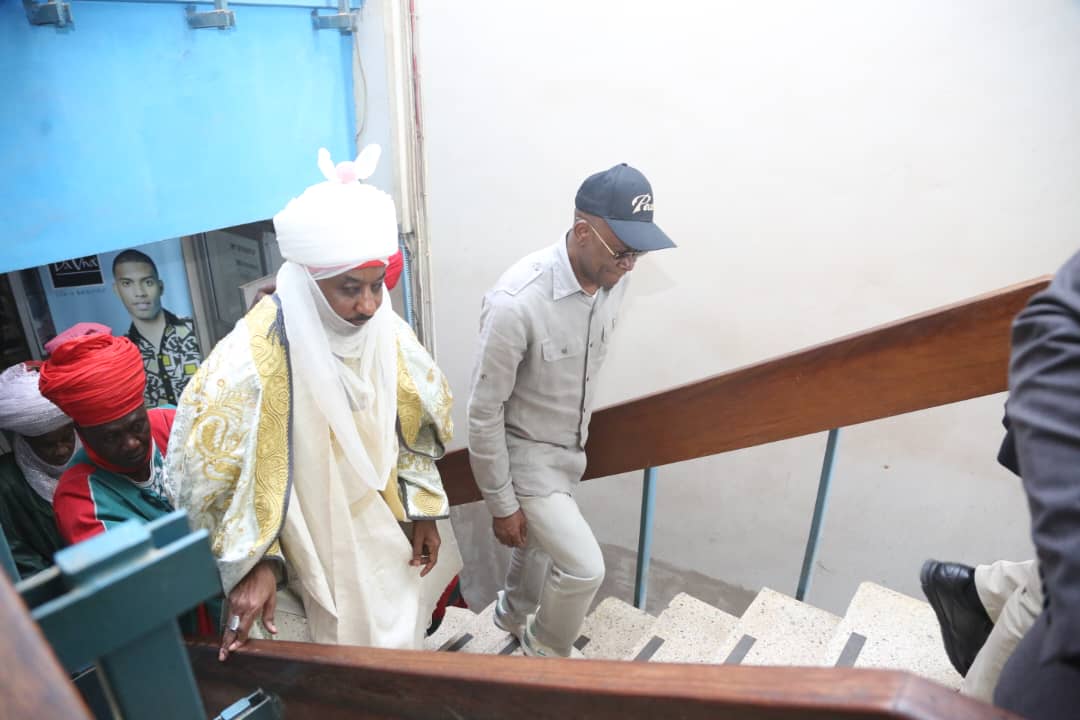
The emir said this in an interview with journalists in Kaduna on Tuesday shortly after a tour of United Textile Company Limited (UNTL) by the Minister of State for Trade and Investment, Senator John Enoh.
Sanusi who is the Chairman of the Board of UNTL , said the textile industry is a vital engine for economic growth and job creation.
He said the minister’s visit to the factory was a good step towards having a conversation with government on the way forward the textile industries.
“The minister’s visit is a very good first step. We are open to a conversation with the government.
“We are looking forward to seeing a change in policy that will make us believe that there will be a sustainable business model”, the emir said.
According to him, poor infrastructure, widespread smuggling, and the absence of effective copyright enforcement, have forced several textile companies such as UNTL, SuperTex, Unitex, Zamfara Textiles, and Funtua Textile to cease production.
“Basically, you have seen the factory and all the investments that are here. Imagine if you could get this alive, what it would do to the economy.
“This is the kind of thing we have been advocating as economists, that the country needs to do”, Sanusi said.
He stressed the importance of investing in labour-intensive sectors like manufacturing and agriculture to combat unemployment and poverty.
“You want to grow the GDP. You can have many ways of GDP growth. But if you have a country of 200 million people, you need growth in labour-intensive industries,” he said.
According to him, “Every country that has created jobs and development had to go through this phase of protecting and promoting its secondary sectors.”
Sanusi also noted the resilience and commitment of UNTL’s foreign investors, particularly the Cha family, who continue to inject funds into Nigeria despite facing immense challenges.
“They have textiles in Ghana, Hong Kong, Europe and the United States. It is not as if they want to leave Nigeria, they have been forced out of business.
“They kept putting in a lot of money, but infrastructural problems, smuggling problems, and copyright problems are obstacles”, he said.
Despite setbacks, Sanusi reaffirmed the company’s determination to fulfilling its financial obligations.
“We will continue to service our debts, no matter what happens. The Cha family (owners of UNTL) will not walk away from its debt, and we will not default.
“Even if they have been bringing in money from abroad to service the debts, it is because their reputation and our integrity are extremely important. We all have our reputations at stake”, the emir said.
Sanusi expressed optimism that renewed dialogue with government could pave the way for the revival of Nigeria’s once-thriving textile industry, generate employment, and contribute meaningfully to the national economy.
“We would like to produce. We would like to create jobs. We would like to see that we are adding value to the Nigerian economy if the government can help us,” he said.
Besides, UNTL, the minister also visited Chellco Industry Ltd, another textile company.
Sanusi makes case for textile sector revival