

By Shu’aibu Usman Leman
A recent, widely publicised address by Vice President Kashim Shettima has inadvertently cast a revealing light on a profound and deeply unsettling paradox embedded within the very fabric of Nigeria’s federal system. This unforeseen consequence of his remarks has ignited a fervent public discourse, raising critical questions concerning the consistent application of constitutional principles, particularly as they pertain to the delicate balance of power and the propensity for federal intervention in the sovereign affairs of individual states. The ongoing debate underscores a fundamental tension that lies at the heart of Nigeria’s democratic experiment: are constitutional principles unwavering tenets, or are they mere conveniences to be invoked when politically expedient?
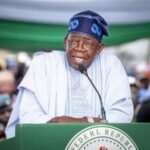
Speaking eloquently at a book launch in Abuja on Thursday, 10th July 2025, Vice President Shettima offered a detailed recollection of a pivotal period during his tenure as the Governor of Borno State under former President Goodluck Jonathan. He vividly described the concerted efforts by the then-federal government to orchestrate his removal from office, an endeavour that, by his account, was ultimately thwarted by the resolute and principled intervention of key figures: Speaker Aminu Tambuwal and Attorney General Mohammed Adoke. Shettima notably recalled Adoke’s famously assertive declaration to President Jonathan: “You do not have the powers to remove an elected councillor.” This bold statement, according to the Vice President, served as an irrefutable testament to the inherent resilience and robustness of Nigeria’s nascent democratic institutions, a sentiment he clearly lauded with conviction.
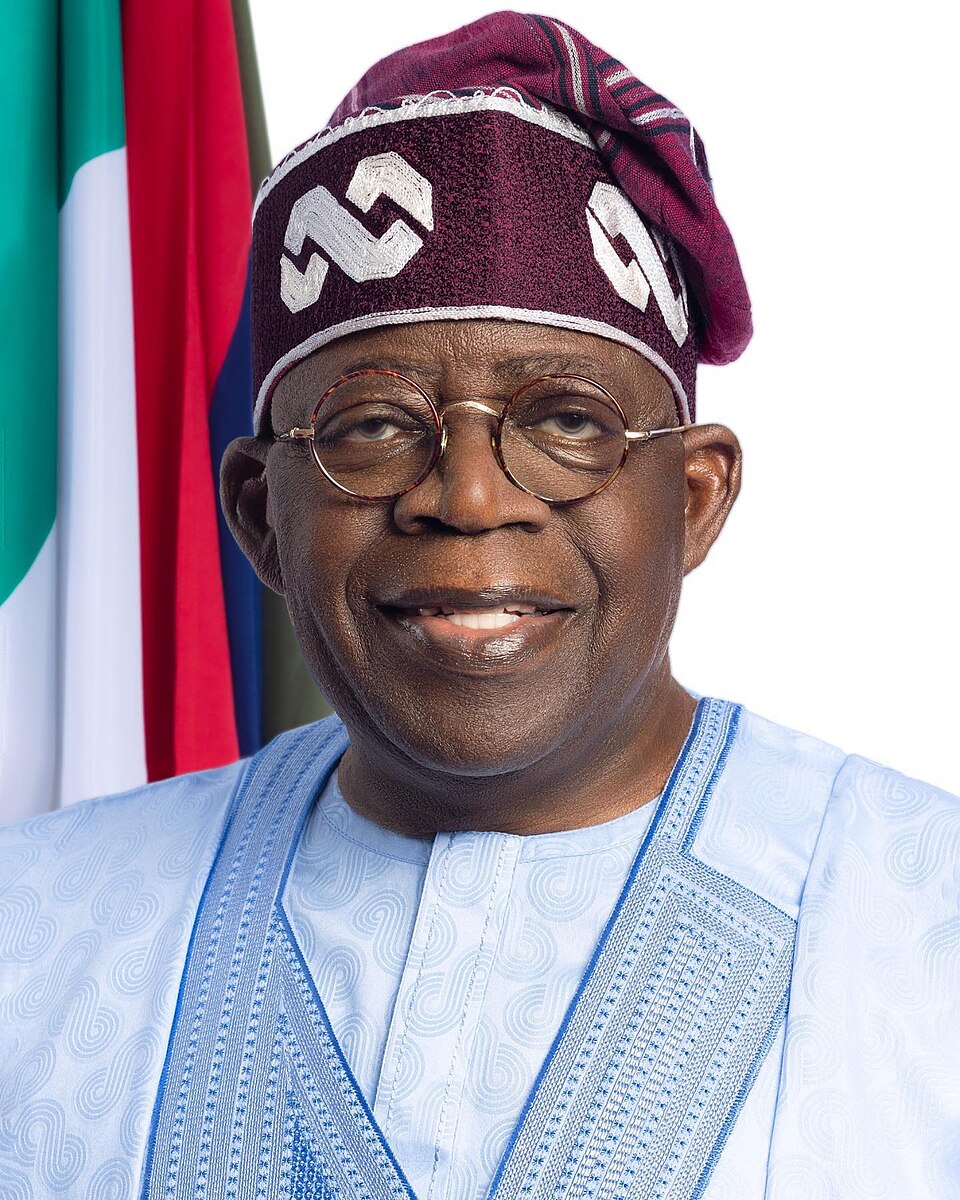
This powerful and widely lauded tribute to the sanctity of the rule of law, however, now casts a considerable and indeed disquieting shadow over the current administration’s very own actions. President Bola Ahmed Tinubu, under whose leadership Vice President Shettima presently serves, has recently found himself subjected to intense public scrutiny for what a significant portion of observers perceive as an unequivocal instance of federal overreach and direct interference in the internal affairs of Rivers State. This situation culminated in the widely reported suspension of Governor Siminalayi Fubara and the subsequent declaration of a state of emergency within the state. While the precise legal framework invoked and the specific language employed by the federal government remain subjects of considerable contention and ongoing debate, the optics of the situation are, for many, undeniable and deeply concerning. The federal government, it appears, is currently treading on constitutional ground that Vice President Shettima himself once passionately and vociferously argued should remain inviolable and sacrosanct, thereby creating a compelling and discomforting juxtaposition.
The central and profoundly pressing question that inevitably arises from this stark juxtaposition is both direct and challenging: can Vice President Shettima’s earlier, unequivocally principled stance against federal overreach during the Jonathan era genuinely coexist with his apparent silence, or indeed his perceived complicity, in a strikingly similar, if not analogous, episode under the current leadership of President Tinubu? If, as Shettima once so forcefully asserted, a President unequivocally lacks the constitutional authority to remove even an elected councillor, how then should the current administration’s actions, which demonstrably extend to a sitting governor, be interpreted and reconciled within the framework of Nigeria’s constitutional democracy? This presents a significant challenge to the consistency and integrity of constitutional adherence within the country.
It is, of course, absolutely crucial to acknowledge and fully appreciate the intricate and often labyrinthine nature of Nigerian political dynamics. Allegations of gross misconduct, periods of pervasive political instability, or even genuine threats to national security can, at certain junctures, legitimately invite and indeed necessitate a degree of federal attention and intervention. Yet, even in such extraordinarily challenging circumstances, the imperative remains absolute: constitutional limits are unequivocally expected to be observed with the utmost rigour, and the inherent sovereignty of the federating states must be scrupulously respected. The balancing act between necessary intervention and constitutional overreach is a constant tightrope walk for any federal system.
What renders this particular moment especially poignant and fraught with significance is the undeniable fact that individuals who had previously and publicly championed the cause of constitutional restraint and due process are now themselves ensconced in positions of executive authority and immense power. Their silence—or, even more critically, their direct participation—in any form of federal overreach risks not only profoundly undermining the credibility and moral authority of the Tinubu administration but, more gravely, poses a direct threat to the very integrity and foundational principles of Nigeria’s nascent democratic institutions. The glaring contrast between Shettima’s past, unwavering declarations and the present unfolding reality presents a deeply troubling paradox: were his earlier pronouncements merely expedient expressions of self-preservation during a personal political struggle, or were they, in fact, genuine and enduring commitments to the enduring principles of constitutional democracy that must now, more than ever, be robustly defended, even from within the confines of his own administration?
In a remarkably swift and emphatic response to what it sternly termed “gross misrepresentation,” the Office of the Vice President, acting through Stanley Nkwocha, the Senior Special Assistant to the President on Media & Communications, promptly issued a comprehensive press statement on 11th July 2025. The statement vehemently and unequivocally denied any perceived or actual linkage between the Vice President’s historical remarks and the highly volatile situation currently unfolding in Rivers State. It firmly asserted that Shettima’s comments were nothing more than “historical references to events that occurred during the Jonathan administration, and constituted nothing more than an intellectual discourse on Nigeria’s constitutional evolution.”
The Vice President’s office explicitly clarified its position, stating that “President Tinubu did not remove Governor Fubara from office. The constitutional action taken was suspension, and not outright removal.” It further elaborated that this action was an integral part of a broader set of measures implemented, which notably included the declaration of a state of emergency, all undertaken in direct response to what it described as “grave circumstances surrounding the polity in Rivers State at the time.” The statement specifically cited the egregious demolition of the State House of Assembly complex and the looming, palpable threat of an impeachment proceeding against the Governor as primary justifications for the federal intervention.
The official statement robustly argued that the situation prevalent in Rivers State, which it characterised by “daily incidents of politically motivated violence, systematic attacks on federal institutions, and complete paralysis of governance,” had unequivocally reached a “constitutional threshold” under the provisions of Section 305(1)(c) of the Nigerian Constitution. This, it contended, legally authorised the federal government to undertake extraordinary measures to restore peace, order, and security to the beleaguered state. Crucially, the statement highlighted that President Tinubu’s proclamation invoked Section 305(2) and, significantly, was subsequently ratified by a “bipartisan majority in the National Assembly,” thereby demonstrating “universal recognition among our elected representatives that Rivers State had reached a point of constitutional necessity.” This ratification, the statement implied, lent significant democratic legitimacy to the federal government’s actions.
This current, highly charged debate is by no means without considerable historical precedent within Nigeria’s relatively young democratic journey. Former President Olusegun Obasanjo, a towering figure in Nigerian politics, famously exercised his executive powers to remove elected governors in two distinct states during his own tenure: Joshua Dariye of Plateau State in 2004 and Ayo Fayose of Ekiti State in 2006. Both of these removals were carried out under the umbrella of declarations of a state of emergency, a legal instrument often employed in times of grave unrest. Interestingly, the then-Governor of Lagos State, Bola Tinubu himself, was a vocal critic of Obasanjo’s decision to remove Governor Dariye, publicly denouncing the action as “illegal.” This rich and often contradictory historical context adds yet another intricate layer of complexity and historical irony to the current federal intervention under President Tinubu’s very own watch, inviting comparisons and raising questions about the evolution of his own stance on federalism.
The perennial tension between the central authority of the federal government and the constitutionally guaranteed autonomy of regional units, as vividly demonstrated in Nigeria, is a common and enduring challenge for federal systems across the globe. Illustrative examples from other diverse nations serve to underscore this delicate and often precarious balance:
India’s “President’s Rule”: This constitutional provision allows the central government to take direct control of a state’s administration in circumstances of a breakdown of constitutional machinery, a mechanism that has often been controversial and subject to political interpretations.
The United States: Federal intervention in state affairs in the US is typically highly circumscribed, often occurring in specific instances related to the enforcement of civil rights or in situations of severe financial distress, reflecting a strong emphasis on state sovereignty.
Australia: The Australian federal government exerts significant influence over its states, often through the strategic allocation of financial grants, thereby using fiscal power as a tool for policy harmonisation and sometimes, implicit control.
The Highly Centralised UK: Even in the United Kingdom, despite its historically centralised nature, the devolution of powers to Scotland, Wales, and Northern Ireland has introduced complex dynamics, showcasing the challenges of managing multi-tiered governance even within a unitary state.
These diverse national experiences, each with its unique historical and political trajectory, consistently grapple with the fundamental question of how to effectively reconcile central oversight and necessary intervention during times of profound crisis or alleged misconduct, with the indispensable imperative to respect and uphold the autonomy and democratic mandate of sub-national entities.
The Nigerian situation, therefore, resonates deeply with a much broader, global conversation about the delicate and often precarious equilibrium that must be maintained between abstract constitutional principles and the pragmatic exercise of political power within multi-tiered governance systems. The persistent calls for constitutional restraint, for the unwavering observance of the rule of law, and for the profound respect for the inherent sovereignty of the federating units are not merely esoteric or abstract legal principles. Rather, they represent absolutely vital safeguards against the gradual but insidious erosion of democratic institutions and the potential descent into authoritarian tendencies.
Vice President Shettima’s own powerfully articulated words—”You do not have the powers to remove a councillor”—serve as a potent and enduring reminder of precisely what is fundamentally at stake in this ongoing debate. The enduring challenge for the Tinubu-Shettima administration, and indeed for the continued maturation and evolution of Nigeria’s often turbulent democracy, is to demonstrably prove, through consistent action and unwavering commitment, that these principles are not merely situational expressions or convenient political rhetoric. Instead, they must be shown to be unwavering, deeply held commitments that are to be upheld with uncompromising resolve, regardless of who currently holds the powerful reins of governance. Only then can Nigeria truly navigate its federal paradox and solidify its democratic foundations.
Leman is a former National Secretary of the Nigeria Union of Journalists (NUJ)
Email: shuaibuusmanleman@yahoo.com