




By Shu’aibu Usman Leman
Professor Pat Utomi, a distinguished Nigerian academic, economist, and seasoned politician, has ignited a fervent national debate with the audacious establishment of a ‘shadow government’.
This provocative move arrives at a critical juncture for Nigeria, a developing Commonwealth nation grappling with a perceptible decline in the vigour of its traditional opposition parties. The haemorrhaging of key political figures to the ruling All Progressives Congress (APC) has not only depleted the opposition’s numerical strength but also significantly muted its voice within the National Assembly. Utomi’s initiative, therefore, serves as a direct challenge to the established political order, simultaneously sparking vital conversations about the very essence of parliamentary democracy and the indispensable role of constructive dissent, especially pertinent within the Commonwealth.
In any healthy parliamentary democracy, a robust and effective opposition is not merely a desirable luxury; it is an absolute imperative. Such an opposition fulfils several critical functions. Firstly, it ensures accountability by holding the government to account for its policies, decisions, and administrative actions. This includes meticulously scrutinising public spending and vociferously demanding transparency to safeguard the public interest. Secondly, it seeks to present alternatives. Beyond critique, a vibrant opposition provides alternative policy proposals and diverse perspectives, fostering meaningful national debate and offering voters genuine choices at the polls – which is a cornerstone of democratic vitality.
Furthermore, a strong opposition acts as the voice for the interests of citizens who did not support the ruling party, ensuring their voices are heard and grievances addressed.
This upholds the fundamental principle of inclusive governance and prevents the marginalisation of significant segments of the population. Finally, and crucially, it scrutinises legislation. The opposition plays a vital role in the legislative process by vetting bills, proposing amendments, and ensuring that new laws are thoroughly considered and demonstrably contribute to the public good.
While these tenets are inherently applicable to parliamentary democracies, their significance resonates with particular force within Nigeria’s presidential system.
A strong opposition remains paramount for consistently challenging the government’s actions and policies, providing alternative viewpoints, and championing the concerns of those who did not vote for the incumbent party.
However, Nigeria’s specific presidential dynamics influence how these functions unfold; for instance, the rigorous separation of powers dictates how opposition parties engage with various government branches.
Bolanle Bolawole, in his The Tribune column on 11th May, “Much Ado About Utomi’s ‘Shadow Government’,” highlighted Professor Utomi’s recent announcement of the formation of a “shadow government.” This initiative, which Utomi has aptly dubbed a “national emergency response,” explicitly aims to scrutinise the current government’s performance, proffer alternative policies, and champion good governance in Nigeria.
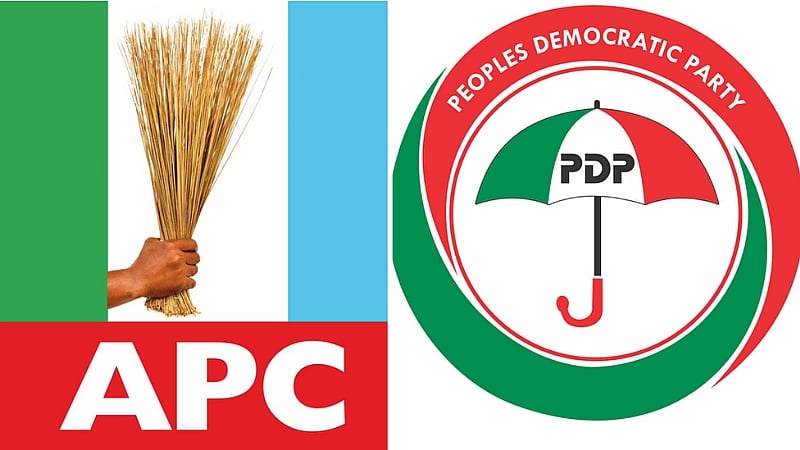
The impetus for this bold move stems from a perceived vacuum in effective opposition. The main opposition Peoples Democratic Party (PDP) is reportedly in disarray due to a spate of defections, whilst the Labour Party grapples with persistent internal divisions. Other political figures and their potential alliances are widely seen as lacking any substantive promise.
Furthermore, existing institutions such as the National Assembly and the judiciary are often viewed with deep suspicion, frequently criticised as being compromised or merely rubber-stamping government decisions. Even organised labour and student activism, once vibrant forces of societal change, are now widely perceived as mere shadows of their former selves.
Utomi’s “shadow government,” formally unveiled as the “Big Tent Coalition Shadow Government,” is meticulously designed to function as a credible opposition.
It plans to convene weekly to review public policies, propose alternative solutions across crucial sectors like the economy, education, healthcare, and security, and assiduously promote integrity and transparency – qualities Utomi suggests are demonstrably lacking in the current administration.
He has specifically critiqued the government’s handling of the petroleum subsidy removal and advocates for a decentralised policing system. The group comprises a diverse array of professionals and public figures, with individuals assigned to specific portfolios, such as the distinguished human rights lawyer Dele Farotimi, who leads the Ombudsman and Good Governance portfolio.
Whilst many Nigerians undoubtedly welcome the prospect of a more robust opposition, the nomenclature “shadow government” has predictably drawn a degree of criticism. The Minister of Information and National Orientation, Mohammed Idris, has emphatically dismissed the initiative as unconstitutional and fundamentally unsuitable for Nigeria’s presidential system.
He correctly argues that a shadow government is typically a defining feature of parliamentary democracies like the United Kingdom, where it comprises the leadership of the largest opposition party, poised to assume power should the ruling party be unseated.
The central point of contention thus revolves around the name itself. While the undeniable need for a vibrant opposition in Nigeria is self-evident, particularly given the perceived failings of existing institutions, the term “shadow government” might be deemed unnecessarily provocative or an ill-fitting appellation for a non-parliamentary system.
Perhaps a less contentious designation, such as a “think-tank” or a “pressure group,” might prove more appropriate. Ultimately, should Utomi’s group genuinely succeed in holding the government accountable and offering constructive alternatives, it will provide Nigerians with a much-needed benchmark against which to judge the effectiveness of both the incumbent administration and its self-appointed critics.
However, for true credibility and to foster genuine trust, the group should demonstrate a willingness to acknowledge the government’s successes alongside its criticisms.
In his The Nation column on 19th May 2025, the celebrated columnist Sam Omatseye argues that Pat Utomi, despite his academic demeanour, possesses a history of pursuing what Omatseye terms “unrealistic political ambitions,” essentially “chasing shadows.” This assertion is evidenced by Utomi’s past presidential and gubernatorial bids, particularly his request for the delegates’ list on the day of the primary election – a rookie error in Nigerian political parlance.
Omatseye contends that Utomi’s motivations do not stem from intellect, patriotism, or political theory, but rather from personal “malice” towards the All Progressives Congress (APC). Utomi reportedly feels snubbed after contributing to the party’s manifesto but subsequently being excluded from power once the APC assumed office.
The author sharply criticises Utomi’s call for a “shadow government,” concurring with the Minister of Information, Mohammed Idris, who correctly highlighted that presidential systems, unlike the Westminster system, do not typically feature such structures.
Omatseye emphasises that Utomi, as a professor of political science, would be fully aware that shadow cabinets in countries like the UK, Canada, and Australia are formed by elected opposition figures who are demonstrably loyal to the constitution and the sitting government. These “loyal oppositions” possess titles but no real power.
Omatseye asserts that Utomi’s notion of a shadow government lacks constitutional legitimacy and is fundamentally an “insubstantial idea.” He argues that a true government requires constitutional backing, citing Nigeria’s First Republic where Obafemi Awolowo legitimately led an opposition within a codified legal framework.
The author also suggests that Utomi, despite his academic background, appears to disregard historical facts, preferring abstract theories. Omatseye asserts that democracy and the law should “gag” attempts to form a government outside constitutional provisions, labelling Utomi’s actions as “subversion” and “rebellion by stealth.”
Omatseye directly links Utomi’s current actions to grievances stemming from the 2023 election, where his party finished a distant third. He notes that some of Utomi’s supporters resorted to attempting to intimidate judges and even calling for military intervention, actions which Utomi reportedly did not condemn.
The column concludes by stating that whilst political systems can be adapted, any changes must adhere to a proper process. If Utomi genuinely believes a presidential system should include a shadow government, he should advance a theory backed by historical evidence and subsequently push for its legislative enactment. Otherwise, Omatseye posits, his actions amount to an attempt to “heist the state,” a “walking shadow” that signifies nothing but “illusion.”
Predictably, Professor Utomi’s initiative has drawn a stern and swift reaction from the Nigerian government. The Department of State Services (DSS) has unequivocally labelled the shadow government “illegal,” threatening legal action against him. This robust response has, in turn, ignited a broader national dialogue about the precise bounds of political expression, the legal frameworks regulating political associations, and the fundamental role of opposition in a vibrant democracy.
The implications of Utomi’s endeavour are profound and potentially far-reaching. His actions can bring about heightened political tensions where there is a significant risk of an escalation of conflict and polarisation within Nigeria’s already strained political landscape, potentially leading to increased public debates and confrontations between state actors and civil society groups.
At the same time we are likely to witness intensified reflections on the roles of the opposition as this bold move may prompt a renewed examination of the opposition’s effectiveness within Nigeria’s evolving democracy, potentially leading to a re-evaluation of existing political structures and conventions.
As expected there are anticipation of legal challenges. The likelihood of significant legal confrontations concerning the constitutional legitimacy and operational scope of a non-state-sanctioned ‘shadow government’ could force a re-evaluation of existing laws and precedents. On the other hand, we are likely to experience increased international scrutiny from international actors, particularly the Commonwealth, regarding its adherence to democratic principles, freedom of association, and the crucial protection of political dissent.
Professor Utomi’s bold initiative also raises a series of pressing questions.
Does the proposed ‘shadow government’ operate entirely within Nigeria’s constitutional framework, or does it navigate a precarious legal grey area? Can this alternative governance structure genuinely hold the ruling party accountable, or will it ultimately be perceived as a symbolic gesture lacking concrete impact?
How will established government institutions and security agencies respond in the long run, and what ramifications will their reactions have for political stability and the broader democratic milieu? Furthermore, what precedents might this initiative set for future political activism and opposition movements in Nigeria and beyond, particularly within other developing democracies in the Commonwealth?
Utilising social media, particularly X (formerly Twitter), Professor Utomi has effectively articulated his concerns about the government’s perceived attempts to suppress free speech and democratic engagement in Nigeria. He consistently emphasises the critical need to uphold constitutional rights, including freedom of expression and association – cornerstones of any liberal democracy.
On 5th May, he formally introduced the “Big Tent Coalition Shadow Government,” uniting members from various opposition parties and civil society groups. This coalition explicitly aims to directly address the perceived failings of the current administration and propose workable alternative governance solutions, thereby offering a coherent vision for a more equitable and prosperous future for Nigeria.
The DSS’s assertion that Professor Utomi is attempting to incite chaos and destabilise the nation prompts alarming concerns for observers of democracy globally.
The legal threats against him highlight the fragile boundaries surrounding political expression and the essential functions that legitimate opposition movements must be allowed to fulfil in a true democratic environment.
This questioning of the legitimacy of a ‘shadow government’ underscores a significant tension in Nigeria’s democratic journey, particularly in a landscape where formal opposition is widely seen as weakened or compromised.
As this intricate situation unfolds, its trajectory will depend on a confluence of factors, including judicial outcomes, the political strategies employed by different stakeholders, and, crucially, the responses from key political players across Nigeria.
Professor Utomi’s initiative serves as a significant and potent reminder of the crucial role a vigorous and effective opposition plays in any democratic society. It underscores the imperative for unyielding accountability and transparency in governance.
The ramifications of this bold move are likely to resonate throughout Nigeria’s political sphere for the foreseeable future, profoundly shaping discussions surrounding democracy, governance, and the future of political dissent within the nation, and potentially providing valuable insights for other Commonwealth countries navigating similar democratic challenges.
Leman is a former National Secretary of the Nigeria Union of Journalists (NUJ)
Email: shuaibuusmanleman@yahoo.com