


By Shu’aibu Usman Leman
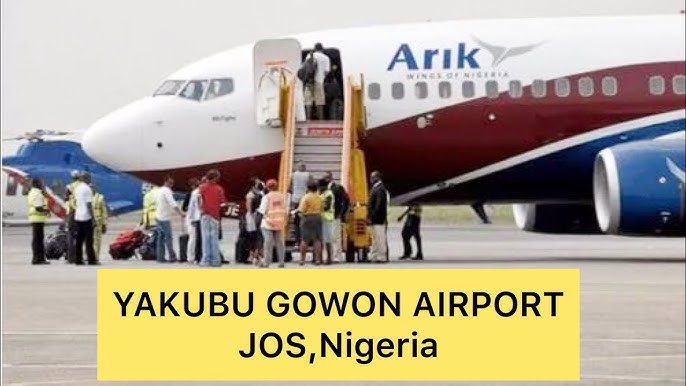
A momentous Memorandum of Understanding (MoU) recently cemented between the Federal Airports Authority of Nigeria (FAAN) and the Plateau State Government is poised to fundamentally reshape Yakubu Gowon Airport in Jos, elevating its status to that of a leading international food cargo hub. This strategically astute initiative, vigorously championed by the Governor of Plateau State, Caleb Mutfwang, is designed to unlock the immense agricultural potential of Plateau State, thereby significantly bolstering Nigeria’s burgeoning non-oil export economy.
Plateau State stands as a veritable breadbasket within Nigeria, widely acclaimed for its exceptional agricultural prowess, encompassing a diverse array of crop production and an undeniably favourable climate for cultivation. The state reigns supreme as the pre-eminent producer of Irish potatoes, remarkably contributing over 92% of the nation’s total output, and holds a commanding position as the primary producer of Fonio grain( Acha) accounting for an impressive 95% of the country’s yield. Beyond these agricultural mainstays, the state’s fertile lands also yield an abundance of other vital produce, including yams, sorghum, maize, cowpeas, rice, a variety of fruits and vegetables, and boasts a rapidly expanding horticulture sector, contributing significantly to the nation’s floral and ornamental plant markets.
This transformative endeavour is widely anticipated to deliver a multitude of far-reaching benefits. Principally, it is expected to substantially mitigate post-harvest losses, a perennial challenge for Nigerian farmers, through improved infrastructure and logistics. Furthermore, it will undoubtedly enhance existing logistical frameworks, streamlining the supply chain from farm to international market. Crucially, it is projected to significantly amplify Nigeria’s agricultural export revenues. In 2022, non-oil exports collectively reached a commendable $4.8 billion, with agricultural products contributing a substantial 30.12% to this figure. The establishment of a dedicated and state-of-the-art food cargo hub will unequivocally position Nigeria as a more competitive and formidable player in the intricate global agricultural market, attracting much-needed foreign direct investment and vigorously fostering the growth and development of ancillary local industries.
Moreover, this forward-thinking initiative holds immense promise for robust job creation, particularly amongst Nigeria’s vibrant youth demographic. It is set to stimulate a plethora of opportunities across various critical sectors, including logistics, cold chain management, rigorous quality control, sophisticated packaging solutions, and advanced agro-processing. Beyond the immediate economic uplift, enhanced agricultural productivity and the marked reduction in post-harvest losses are unequivocally crucial for the long-term improvement of food security and stability not only within Plateau State but across the entirety of Nigeria. This contributes directly to national resilience and well-being.
However, despite this undeniably promising outlook, a number of considerable challenges persist that necessitate proactive and concerted efforts. The prevailing issue of insecurity in certain parts of Plateau State, regrettably, continues to disrupt vital agricultural practices, impeding farmers’ access to their lands and markets. Furthermore, inadequate rural infrastructure, characterised by poorly maintained roads and an alarming insufficiency of modern storage facilities, significantly hinders effective distribution and preservation of produce. The increasingly palpable impact of climate change, manifesting in unpredictable weather patterns, recurrent droughts, and devastating flooding, poses a further existential threat to agricultural output, demanding urgent adaptation strategies.
To effectively overcome these formidable hurdles and ensure the long-term success of this ambitious project, experts emphatically underscore the imperative for proactive and substantial investment in climate-resilient agricultural practices and robust infrastructure. This encompasses a multi-faceted approach, including the implementation of advanced security measures to safeguard farming communities and supply chains, the wholesale improvement of critical rural infrastructure to facilitate seamless transportation, the widespread promotion of sustainable farming techniques that preserve natural resources, and the meticulous development of comprehensive climate-smart agriculture strategies that empower farmers to adapt to changing environmental conditions. Furthermore, the forging of synergistic public-private partnerships will be absolutely crucial for mobilising necessary resources and expertise, alongside enhanced farmer education programmes that equip agriculturalists with the knowledge and skills required to thrive in a modern, globally connected market.
The envisaged transformation of Yakubu Gowon Airport into a bustling international food cargo hub draws inspiration from and mirrors the success stories of similar models across the African continent. Notable examples include Entebbe International Airport in Uganda, Addis Ababa Bole International Airport in Ethiopia, and Jomo Kenyatta International Airport in Kenya, all of which have successfully established themselves as major conduits for agricultural exports, demonstrating the profound economic impact of such specialised infrastructure.
This truly laudable initiative, spearheaded by Governor Caleb Mutfwang, represents a profoundly promising opportunity to revitalise and invigorate Nigeria’s agricultural sector and its broader economic landscape. With judicious strategic investment, unwavering political will, and highly effective implementation, this project possesses the inherent potential to not only significantly enhance agricultural productivity but also to foster enduring economic resilience and, critically, ensure robust food security for countless future generations across the entire nation. It represents a bold step towards a more prosperous and sustainable future for Nigeria.
Shu’aibu Usman Leman,
is former National Secretary, Nigeria Union of Journalists (NUJ)