By Jonathan Ishaku
I am unlikely to win applause from my colleagues in Plateau State for saying this. But truth is not a popularity contest—it is a responsibility. In the matter of the persistent insecurity in Plateau State, the media must accept that it is not just a witness to failure; it is, in part, complicit in it.
Let us be clear from the outset: journalists are not the instigators of violence. They do not command armed groups. They do not deploy troops. They do not control the vast coercive machinery of the Nigerian state. Yet, between the violence of non-state actors and the failures of government lies a critical space—the space of accountability, vigilance, and public truth. That space belongs to the media. In Plateau State, that space has been dangerously under-occupied by our media!
The Duty Beyond Headlines
The role of journalism in crisis is not exhausted by reporting that violence has occurred. That is the lowest threshold of the profession—the mere announcement of tragedy. True conflict journalism demands more: verification, context, continuity, and accountability.
A journalist in a conflict zone is expected to counter misinformation, not amplify it. To provide safety-critical information, not merely statistics of death. To interrogate state response, not merely recycle official government statements. To humanize victims, not reduce them to numbers. Above all, to sustain attention in the conflict—not just at the outbreak of violence, but in the quiet intervals where the seeds of the next crisis are sown.
In Plateau State, this higher calling has too often been abandoned.
Violence erupts. It is reported. Casualties are counted. Headlines are written. And then—silence. Until the next attack.
The Missing Middle: Where Journalism Fails
What happens between crises is where journalism matters most—and where it is most absent.
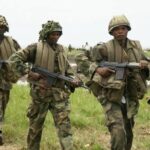
Where are the sustained investigations into the movement of armed groups in vulnerable communities? I recall for some months the communities in Kanam and Wase had been crying aloud about the appearance of strange arms bearers within their territory but media attention was hardly sustained until 14 soldiers were killed in an ambush by the terrorists.
Where is the monitoring of threats openly issued on social media by extremist actors? Nigerians have been reading threats to the peace of Jos and Plateau State on SM for sometimes. One of those faces is called Aminu J. Town’, apparently an estate agent in Abuja. Yet no media had tracked this crisis mastermind ‘up and close’ or exposing his nefarious activities until incidents like Agwan Rukuba happened.
Where is the media engagement with local populations to gauge their sense of safety—or their fear?
The truth is uncomfortable: much of the media has become episodic, not investigative; reactive, and not anticipatory.
Even more troubling is the near-total absence of systematic monitoring of government interventions. Over the years, successive administrations—from Joshua Dariye to Jonah Jang, Simon Lalong, and now Caleb Mutfwang—have operated within a framework heavily supported by federal interventions.
These include the deployment of Operation Safe Haven, the 2004 state of emergency under Olusegun Obasanjo, multiple commissions of inquiry, and, more recently under Bola Ahmed Tinubu, the introduction of surveillance technologies, forest guards, and intensified military operations.
Operation Safe Haven in all its years on the Plateau, has never interdicted, arrested, arraigned, and successfully prosecuted the perpetrators of the Plateau killings. Not a single person! Yet I haven’t seen or read any comprehensive journalistic exposition on this grand public hoodwinking on security protection.
Again, no media has seriously questioned any of the various Plateau State Governors on why they all failed to implement the reports of the various commissions of inquiry.
These interventions are not trivial measures. They represent layers of state response accumulated over decades. Yet, despite this, insecurity persists.
Who is tracking these interventions?
Who is evaluating their effectiveness? For example, does the media know the state of the mobile police station promised for Gashish (or is it Kerang); its state of operation; its capacity for counter terrorism, etc, and how effective it had been against the armed non-state actors in the areas?
I mean, who is tracking the counter measures set all these years? Why do they fail, why they stall, or why they disappear once the headlines fade? Without media inquisitiveness, even this lastest Tinubu’s intervention with an AI surveillance system will suffer the same fate. The reason is that after the headline, the media drifts along with the politicians away from the issues.
The Cost of Media Silence
When the media fails to follow through, the state relaxes into complacency. Policies become announcements, not actions. Institutions become symbols, not systems. Security becomes performance, not protection.
This is the fatal gap.
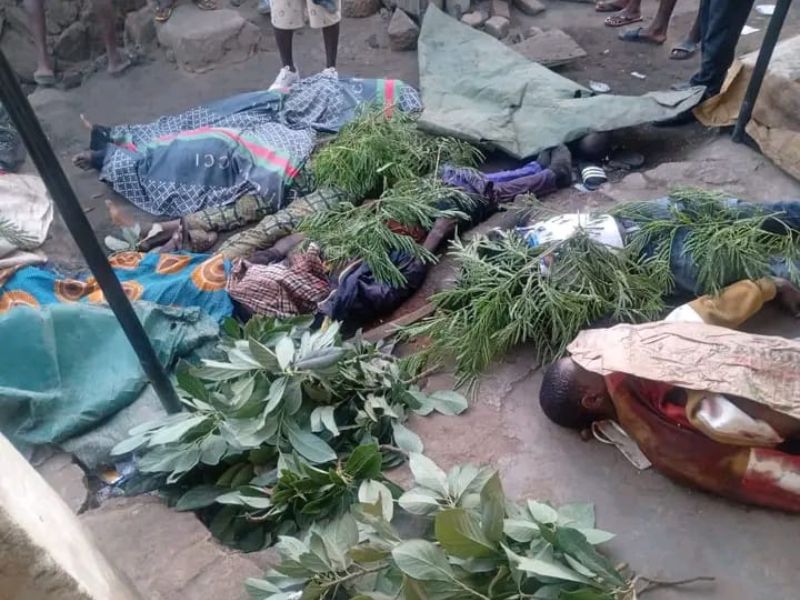
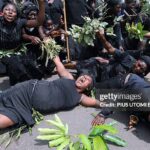
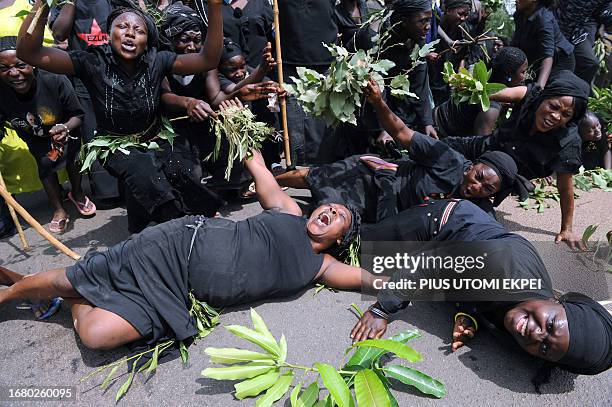
The Palm Sunday attack of March 29, 2026, in Jos is not just another tragic episode—it is an indictment. It exposes not only the failure of security architecture but also the failure of sustained media scrutiny.
Even within the broader international media context—where Nigeria has faced United States’ designation concerning religious genocide and entered into counterterrorism cooperation with it —the crisis in the Middle Belt has persisted with disturbing regularity It is no longer clear whether the main objective of the bilateral cooperation between the two is to stem the ongoing genocide in the Middle Belt, seeing as the US deployment of personnel excludes the area.
This persistence raises hard questions for both countries: Why do attacks continue despite the deployment of the US personnel? What happens to intelligence gathered before these attacks? Why are early warning signs—often visible to communities—ignored? In short, of what use is the military cooperation if the security architecture conducts business as usual? The US media also has the responsibility of monitoring American military conduct on our soil as it does globally wherever their forces are deployed!
The media ought to make these and more demands on the need for security overhaul in Plateau State. We need to see immediate changes. These are not questions for victims. They are questions the media should be asking—relentlessly, unapologetically, and consistently.
From Event Reporting to Systemic Journalism
What Plateau State needs is not more reporting—it needs better journalism.
Journalists must transition from event-based coverage to system-based inquiry. From episodic outrage to continuous scrutiny. From passive transmission to active interrogation.
This requires:
●Embedded Community Reporting: Journalists must be present within vulnerable communities, not just parachuting in after violence.
●Early Warning Monitoring: Tracking patterns, threats, and signals before they escalate into attacks.
●Policy and Security Audits: Regularly assessing the performance of security initiatives and institutions.
● Data-Driven Investigations: Building timelines, mapping incidents, and identifying recurring failures.
● Narrative Responsibility: Avoiding inflammatory reporting while resisting the temptation to sanitize uncomfortable truths.
Above all, it requires courage—the courage to hold power accountable even when access is threatened, even when silence is safer.
A Profession at a Crossroads
Journalism in Plateau State stands at a crossroads. It can continue as a chronicler of tragedy—faithfully documenting each cycle of violence without altering its course. Or it can reclaim its role as a force of accountability and prevention.
The difference lies not in resources but in resolve, because in the end, the media does not pull the trigger. But it can either illuminate the path to peace—or dim the light that might have prevented the next attack.
In a place like Jos, where the cost of darkness is measured in human lives, that choice is no longer optional.
Ishaku, a journalist, essayist, and author, can be reached on bishilee2017@gmail.com.