






By Shu’aibu Usman Leman
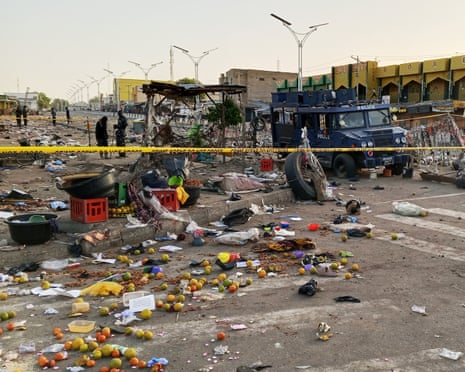
The fragile calm that had settled over Maiduguri was violently disrupted on 16 March 2026, as the city once again descended into a grim theatre of senseless carnage. The explosions that tore through parts of the city struck at a community that has spent more than a decade striving to rebuild its social and economic fabric.
These attacks in the heart of Borno State serve as a stark reminder that the embers of insurgency remain dangerously alive. For residents, such violence is neither distant nor abstract. It is a lived reality that continues to haunt households and define daily existence.
The choice of targets underscores a calculated assault on the very foundations of civic life and human dignity. The attempted attack on the University of Maiduguri Teaching Hospital represents a desecration of a place dedicated to healing and hope.
Transforming such a sanctuary into a scene of bloodshed is a grave violation of humanitarian norms and a chilling reflection of the perpetrators’ disregard for human life.
Hospitals must remain inviolable. Any assault on them constitutes an attack on the moral fabric that binds society together.
Equally troubling was the strike on Monday Market, the city’s bustling commercial hub, and a vital artery of economic activity in the region. Beyond commerce, the market serves as a social anchor where thousands converge daily in pursuit of livelihood and a semblance of normal life. To target such a space is to strike directly at both economic survival and communal cohesion.
The Post Office area, another critical civic node, was not spared, compounding the disruption to daily life and amplifying the atmosphere of fear and uncertainty.
Early reports indicate that no fewer than 23 lives were lost, while more than 100 others sustained injuries and are currently receiving treatment in already strained medical facilities. Behind these figures are individuals whose lives have been abruptly cut short and families thrust into grief and uncertainty.
The sorrow emanating from affected households extends beyond Maiduguri. It is, indeed, a national tragedy. The true weight of this loss cannot be adequately conveyed through statistics alone.
While the resilience of the people of Maiduguri has long been acknowledged, endurance has its limits.
For years, residents have navigated the complexities of insurgency with commendable fortitude. Yet, no citizen should be compelled to rely on “resilience” as a prerequisite for routine activities such as visiting a market.
The persistence of such vulnerabilities raises serious concerns about the effectiveness of existing security frameworks. The condemnation issued by Governor Babagana Umara Zulum is both necessary and appropriate. However, it also highlights a recurring pattern in which strong words are not consistently matched by equally robust action.
Although the governor’s frontline engagement offers some reassurance, the critical challenge lies in translating official pronouncements into concrete and sustained security outcomes. Nigerians are entitled not merely to assurances, but to the guarantee of their fundamental right to life and safety.
It is imperative to recognise the courage of first responders and medical personnel who, despite limited resources and the ever present risk of secondary explosions, responded swiftly to the crisis. Their selflessness represents a beacon of hope amid the prevailing darkness.
The recurrence of such attacks points to the urgent need for a comprehensive reassessment of national security strategies. There must be a shift from reactive responses to proactive intelligence driven measures capable of preventing such tragedies before they occur.
Recent military operations in Sambisa Forest and other insurgent enclaves may have triggered retaliatory actions of this nature. While such offensives are necessary to degrade insurgent capacity, they must be complemented by robust mechanisms for civilian protection. Military gains lose their significance if citizens remain exposed to reprisal attacks.
Periods of relative calm in the North East should not be misconstrued as lasting peace. Rather, they often mask underlying threats that can resurface with devastating consequences. Sustained and multidimensional interventions are essential to prevent a relapse into widespread violence.
Security, however, cannot be the sole responsibility of the armed forces. It must be anchored in trust based collaboration between communities and security agencies. When citizens perceive security institutions as partners, they become invaluable contributors to intelligence gathering and early warning systems.
At the same time, the socio economic conditions that fuel radicalisation demand urgent attention. Persistent poverty, unemployment, and youth marginalisation continue to provide fertile ground for extremist recruitment.
Addressing these structural challenges is indispensable to achieving long-term stability.
Disturbingly, reports of looting at Monday Market during the chaos point to deeper societal concerns. Even in moments of collective tragedy, opportunistic behaviour persists. This underscores the need to confront not only the threat of terrorism but also the broader issue of social erosion.
Notwithstanding the prevailing gloom, Maiduguri’s enduring spirit must not be overlooked. For centuries, the city has stood as a centre of culture, commerce, and learning. Its resilience is deeply rooted and far predates the current wave of violence.
Nevertheless, the time has come to move beyond half measures. Nigeria must confront the reality that the conflict is far from over. A decisive and coordinated approach is required to ensure that citizens can go about their daily lives without fear.
The nation now stands at a critical juncture. The choice is between a future defined by recurring tragedy and one shaped by deliberate and sustained action.
For Maiduguri, and indeed for Nigeria, the imperative is clear. Action must prevail.
Leman is a former National Secretary of the Nigeria Union of Journalists (NUJ)