



By Joseph Kwewum
A few years ago, Africa’s richest man, Aliko Dangote, abandoned plans to enter Nigeria’s steel sector, citing concerns over allegations of monopolistic practices that have trailed his dominance in cement, sugar and other key industries. His withdrawal once again spotlighted the troubled state of Nigeria’s steel ambition.
In September 2022, the Federal Government signed a Memorandum of Understanding with a Russian consortium led by Metallurgical Engineering and Technology Company for the rehabilitation, completion and operation of the moribund Ajaokuta Steel Company Limited and the National Iron Ore Mining Company, located in Kogi State.
The agreement was widely publicised as a decisive step towards reviving a project that has gulped billions of dollars since its conception in the late 1970s.
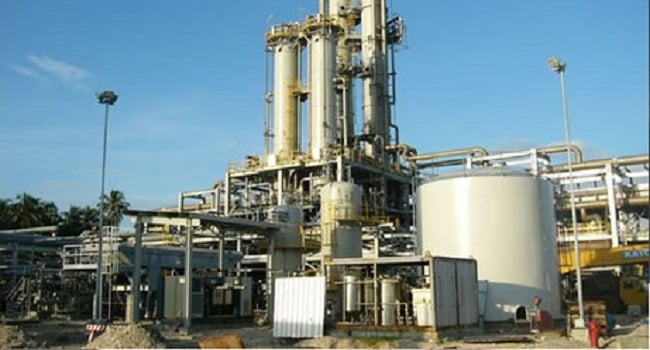
However, more than four decades after construction began in 1979, and over a year after the Russian agreement, Ajaokuta has yet to produce commercial steel. The plant, designed with an installed capacity of 1.3 million metric tonnes of liquid steel per annum in its first phase, remains largely idle despite repeated government assurances and intermittent rehabilitation efforts.
The lingering question remains: Why does Ajaokuta matter so much to Nigeria’s economic future?
Understanding the Steel Mill
A steel mill is an industrial facility where iron is converted into steel by removing impurities and adjusting its chemical composition to achieve specific mechanical properties. Steel is primarily produced from iron ore, scrap metal, or a combination of both.
In the traditional integrated steelmaking route, iron ore is first processed in a blast furnace. Inside this towering structure, iron ore, coke, and limestone are charged from the top, while preheated air is blown in from the bottom. At temperatures that can exceed 1,500 degrees Celsius, chemical reactions reduce the iron ore to molten iron, often referred to as pig iron. Limestone acts as a flux, combining with impurities to form slag, which is separated from the molten iron.
The molten iron is then transferred to a Basic Oxygen Furnace, where high purity oxygen is blown into the liquid metal.
This process lowers the carbon content and removes other impurities, converting the molten iron into steel.
The chemical precision at this stage is critical, as excess carbon or unwanted elements can weaken the final product or make it unsuitable for structural and industrial use.
After primary steelmaking, the molten steel undergoes secondary refining. Techniques such as vacuum degassing remove dissolved gases like hydrogen and nitrogen, while alloy additions introduce elements such as manganese, chromium, or nickel to achieve desired levels of strength, ductility and corrosion resistance.
The refined steel is then cast, often through a process known as continuous casting.
Here, molten steel flows from a ladle into a tundish and then into moulds, where it solidifies into semi finished forms such as billets, blooms, or slabs.
These are later rolled and shaped into finished products, including rods, sheets, beams, and rails.
Why Steel Is Strategic
Steel is widely regarded as the backbone of industrialisation. It is indispensable in construction, transportation, energy infrastructure, defence equipment, and manufacturing. From bridges and rail lines to automobiles and household appliances, steel underpins modern economies.
For a country like Nigeria, which seeks to diversify away from crude oil dependence, a functional steel industry carries immense strategic value. It reduces reliance on imports, conserves foreign exchange, supports local manufacturing, and stimulates job creation across mining, logistics, and fabrication value chains.
Nigeria is endowed with iron ore deposits, notably in Itakpe, also in Kogi State.
The Ajaokuta project was conceived as the nucleus of a broader industrial ecosystem that would include rolling mills and downstream engineering industries. Its failure to take off has therefore represented not just a stalled factory but a missed opportunity for industrial transformation.
The Cost of Delay
Over the years, successive administrations have initiated concession agreements, technical audits, and revival plans for Ajaokuta.
In 2008, the federal government terminated a concession agreement with Global Steel Holdings Limited and later reached a settlement to regain full control of the plant.
Despite these efforts, the complex has remained largely non operational. Energy requirements, obsolete equipment, legal disputes, and funding gaps have all contributed to the prolonged delay. Steel production is capital intensive and energy hungry, requiring stable power supply and integrated logistics networks.
Without these fundamentals, even the most ambitious revival plans risk faltering.
Yet the potential rewards remain significant. A revived Ajaokuta could catalyse heavy industry, reduce Nigeria’s annual steel import bill, and provide raw materials for infrastructure development at a time when the country is investing heavily in roads, rail and housing.
As Nigeria awaits tangible results from the latest rehabilitation agreement, the steel question persists. Beyond politics and policy pronouncements lies a simple economic truth: no nation has achieved large-scale industrialisation without a strong metals sector.
Understanding how steel is made underscores why the stakes are so high. For Nigeria, Ajaokuta is more than a steel plant. It is a test of national resolve, policy consistency, and the long deferred promise of industrial self reliance.