



Fresh political whispers drifting through news salons and media columns suggest that President Bola Ahmed Tinubu is quietly weighing alternative running mates ahead of the 2027 presidential election. The names most frequently mentioned are not obscure. They are prominent northern Christian figures with national visibility and symbolic weight.
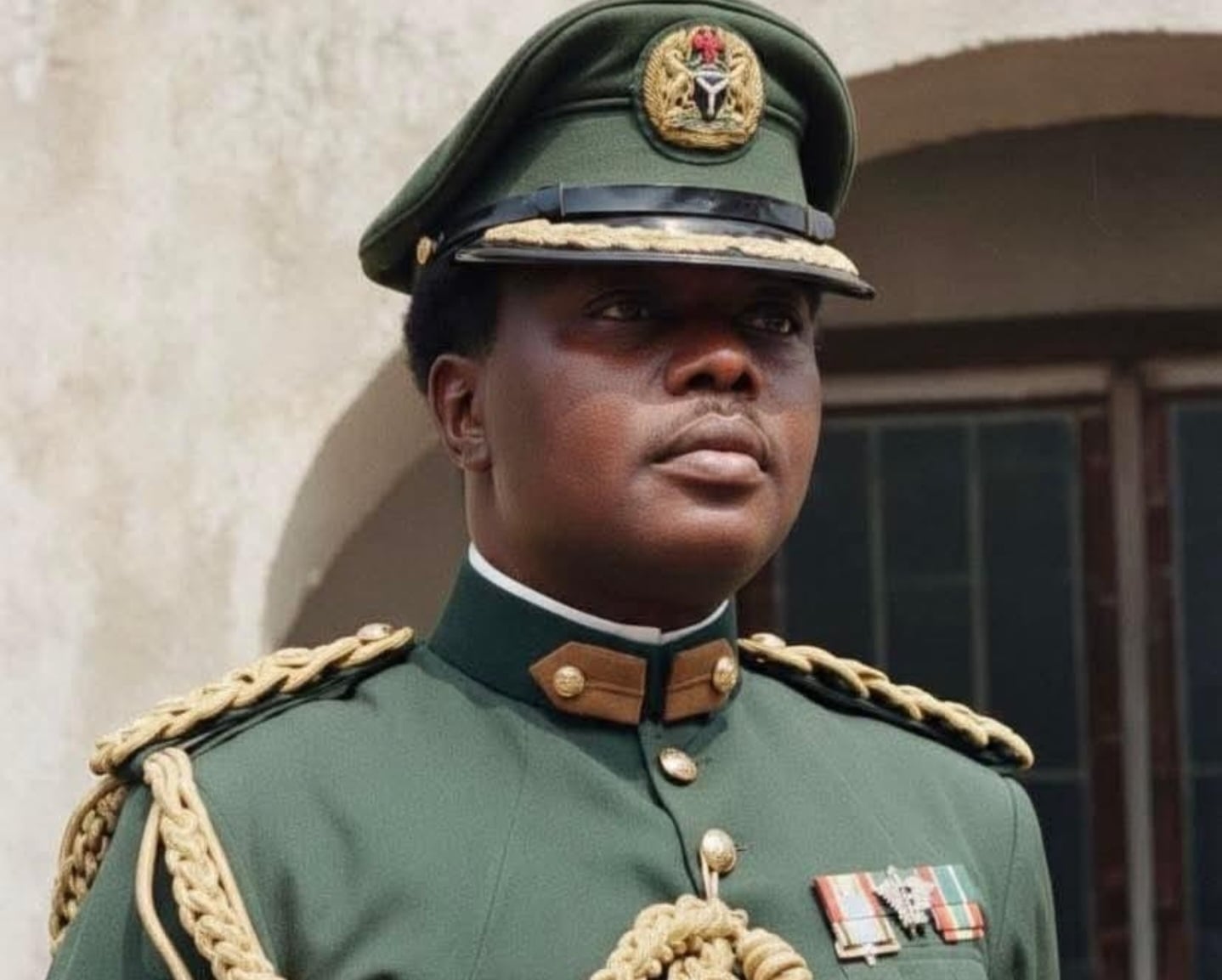
Former Speaker of the House of Representatives, Yakubu Dogara; Defence Minister, General Christopher Musa. Plateau State Governor, Caleb Mutfwang. And the Catholic Bishop of Sokoto, Matthew Hassan Kukah. The whispers share a common thread. They frame the alleged weighing of alternatives as part of a larger political calculation around religious and regional balance after the controversial Muslim-Muslim ticket of 2023. They also point to an inner circle that appears to be thinking ahead, testing options, and perhaps sending signals without formally committing to any course of action. The first sign came when campaign posters bearing President Tinubu’s image began appearing across the streets of Abuja, conspicuously without any trace of Shettima. Amid the whispers stands Vice President Kashim Shettima, elected on the same ticket as Tinubu, serving a mandate that runs concurrently with the President’s, and who, by constitutional logic and political convention, ought to be presumed the natural running mate in 2027 unless compelling reasons suggest otherwise.
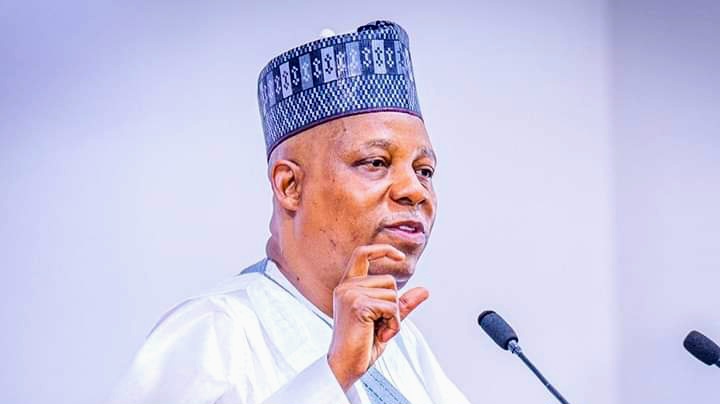
What makes the current moment intriguing is not simply that names are being mentioned. Politics thrives on rumours after all. What shocks observers of the polity is the manner in which the Vice President appears reduced to a passive presence in discussions about his own political future. At one moment, he is treated as an afterthought; and at another moment, as a loyal functionary dispatched on errands while others debate whether he remains relevant to the project he helped midwife. The image calls to mind Oblomov in Ivan Goncharov’s novel, Oblomov. A character defined by inertia and resignation. A man whose life unfolds around him while he lies still, allowing others to decide what becomes of his estate, his relationships, and his destiny. When Shettima is not rendered invisible in elite conversations, he is portrayed as a man running presidential errands but without real agency. Flying out to represent the President. Receiving delegations. Offering dutiful loyalty, while the central question of his political fate hangs unresolved, sometimes discussed in rooms he has just exited and sometimes in rooms he may never enter.
The irony is sharp. Shettima is not a novice. He is a former governor, and a seasoned party man. He was not selected in 2023 as a brooch fastened to presidential clothing or an ornamental addition. He was chosen despite strong objections from many quarters, including religious leaders and civil society voices who warned against the dangers of the same-faith ticket in a deeply plural country. Those warnings did not dissipate after the election. They lingered. They hardened into criticisms that have followed the administration. International partners, including voices from the United States, have made careful but pointed remarks about inclusion and representation. At home, the perception that Christian constituencies, especially in the North, felt alienated continued to shadow the government.
The renewed circulation of alternative running mates must be read against this background. It signals an attempt to correct a political imbalance that many believe cost the ruling party moral capital. By floating respected northern Christian figures, Tinubu’s presidency appears eager to reassure sceptical audiences that lessons have been learned and that the future will look different. Still, the so-called attempt at weighing alternatives raises serious questions about political ethics and loyalty. What does it say about the stability of presidential and vice presidential partnerships when a sitting vice president is treated as expendable barely midway into the first term in office? What message does it send to party loyalists who defended the 2023 ticket at great personal cost? And what precedent does it set for the future?
The Constitution grants the President wide latitude in selecting a running mate. That power is not in dispute. Political wisdom, however, demands more than constitutional permissibility. It requires sensitivity to process, respect for incumbents, and an understanding of how power is perceived as much as how it is exercised. There is also a deeper institutional issue at play. The office of the Vice President in Nigeria has long suffered from ambiguity. Its occupant is either overly powerful, a spare tyre that is painfully useless, or surplus to requirements. Rarely is there a stable middle ground defined by clear responsibilities and mutual respect.
From Obasanjo’s frosty relationship with Atiku Abubakar to Buhari’s cautious sidelining of Professor Osinbajo, history offers little comfort. Shettima’s predicament fits neatly into this pattern. He is visible but constrained. Present but peripheral. Trusted enough to represent the President abroad, but seemingly not trusted enough to be shielded from speculation about his replacement. The mention of figures like Dogara, Mutfwang, Musa, and Kukah adds further layers to the conversation. Dogara brings legislative gravitas and a record of defying party lines on principle. Mutfwang represents a Christian minority state scarred by violence and neglect. Musa embodies military professionalism at a time of persistent insecurity. Kukah symbolises a strain of moral authority whose polish has worn thin, weakened by his muddled interventions on claims of Christian genocide in Nigeria. Each name appeals to a different constituency. Each underscores what the current ticket lacks in the eyes of critics.
What remains missing is an honest conversation about governance performance. Electoral arithmetic alone cannot substitute for accountability. If the administration believes that changing the face of the ticket will cure deeper discontent, it risks mistaking symptoms for causes. Nigerians are burdened by inflation, insecurity, and a sense of economic drift. No vice presidential reshuffle can obscure these realities. For Shettima himself, the moment demands clarity and resolve. Silence can be dignified, but prolonged silence in the face of open speculation risks being read as acquiescence.
Political survival in Nigeria rarely rewards quiet endurance and favours strategic assertion. More’s the pity for a Vice President who finds his future debated as an abstraction rather than being confronted as a political fact. More’s the pity for a power order that normalises such uncertainty at the heart of presidential power. And more’s the pity for a country whose politics revolves around personalities and permutations rather than the hard work of governance. Whether these discussions are trial balloons or serious plans, they reveal an administration already looking beyond its present mandate. That alone should give pause. Power is most effective when it is anchored in purpose, not perpetually distracted by succession. But do Tinubu and his goons care?