


By Joseph Shawulu Kwewum
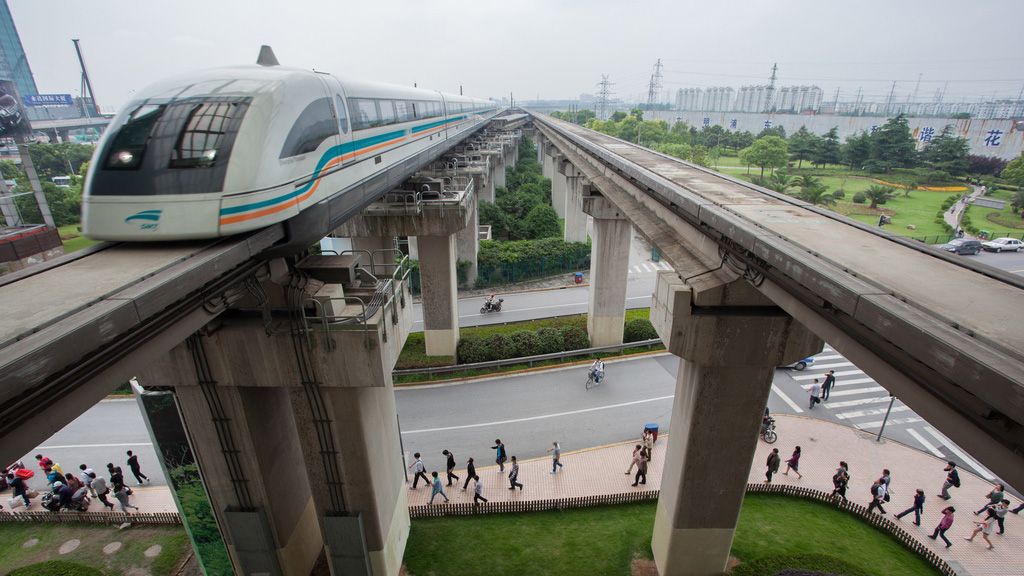
In 2001, Chinese and German engineers began a project that would give insight into what is possible. Three years and $1.6 billion USD later, the Shanghai Maglev Train or Shanghai Transrapid was completed. The train line, which connects Shanghai Pudong International Airport and Longyang Road, is a marvel of innovation, travelling at over 300 km/h and undergoing updates every year or so to include more lines and stops.
The line now carries over 1 million people yearly, with the total ridership from its inception in 2002 to 2024. The train itself has had over 16 million miles of safe usage.
If you calculate the distance between Nigeria’s two main airports, Murtala Muhammed International Airport in Lagos and Nnamdi Azikiwe International Airport in Abuja, the flight distance is roughly 511 kilometres (317 miles). The Straight-line distance: ~536 km (333 miles) and the Road distance: ~700–750 km (approx. 435–465 miles), depending on the route taken (typically via the Sagamu-Benin Expressway or through Ibadan and Ilorin). For those at home who don’t have a calculator nearby or who didn’t care too much about Algebra in their SS2 second term, the Shanghai Maglev would typically take 1 hour and 22 minutes, to travel between the two major Nigerian Airports.
So why don’t we build one? It isn’t very easy… assuming a perfect scenario in which all forms of governmental waste and corruption are eradicated tomorrow; bandits and terrorists that taint and terrorise the country are gone we would still have the issue of Nigeria’s geography. Please do not confuse the unwillingness of the Nigerian government to create one as proof that it isn’t possible. However cross state transit or international lines like those in European countries are a significant commitment, not made any easier by the geography that makes Nigeria such a beautiful country, the vast mountainous plains that sharply interject with swampy marshlands and uncharted woodlands and jungles make it hard for any engineers to plan especially for such an all-consuming project.
The second issue is the scourges of, banditry and terrorism which make an already difficult task feel even more impossible when such a project comes online. When it comes online I highly doubt whether someone could hijack a train going at 380 km/h, as the threat of encountering bandits is enough to put off any citizen that would otherwise be willing to use it.
We might not be able to build our own Shanghai Maglev Train, but we can take a few lessons from it. Transportation is a key feature of Industrialization, with trains playing a significant role, mainly due to their efficiency. What makes the Maglev trains most special is the key to what might help us. Maglev trains do not rely on wheels touching rails; they experience little friction, resulting in smoother rides and significantly reducing mechanical wear, which lowers long-term maintenance needs. They are highly energy-efficient and run on electricity, meaning we won’t have those pesky debates about oil usage or “natural resources” that dominate Nigerian discourse. Maglev systems are also very safe and reliable, with automated controls and a low risk of derailment, and they are less affected by traffic or weather delays. In addition, maglev guideways can handle steeper slopes and tighter curves, require a smaller land footprint, and are often elevated, meaning we could sidestep that pesky geography that kills every Nigerian transportation system before it gets off the ground.
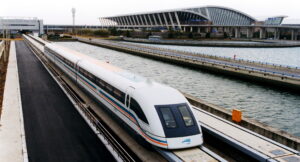
The Maglev isn’t a “magic bullet,” and the project’s cost would be steep. Still, the advantages it provides are things we must start thinking about as a nation energy energy-efficient, low-cost transportation inspires trade and growth; those two create the breathing room for greater innovation in the future, if that means the creation of walkable cities where cars submit to civilian or the creation of effective bus transit within our major cities. We may be a decade away from Maglev in Nigeria, but we can start building the society that will make the most of it today.