





Women in Nigeria remain grievously underrepresented in elective offices. In the 10th National Assembly only 16 women sit in the 360 member House of Representatives (about 4.2%), and in the Senate only 4 women occupy seats in the 109 member chamber. Across the 36 states, 14 states reportedly have no female state legislators at all. In the 36 state Houses of Assembly combined, women hold only about 50 seats out of 993 (roughly 5 %). These numbers are shockingly low, especially in a country where women make roughly half the population.
These dismally low figures are not accidental. They are the outcome of skewed and poorly thought out policies, structural bias, and a political culture that privileges men. When the laws, party rules, norms, resources, and power networks all tilt in one direction, it is no surprise that women are marginalized. The Reserved Seats for Women Bill (also called the Special Seats Bill or Specific Seats Bill) is intended to correct that imbalance by constitutionally creating additional legislative seats reserved exclusively for women. But for it to succeed, we must call out the broken system that makes such a bill necessary.
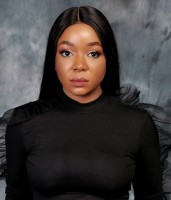
I speak not just as an advocate but as someone who lived the ordeal. In 2019, I ran for office in my LG, Jema’a Local Government in Kaduna State. From the start, my candidacy wasn’t taken seriously because I was a woman. To my face I was told that a woman had never contested in our LG, so I should run merely to make a name and possibly get a political appointment someday but that I would not be given the party ticket to genuinely contest. That dismissal was public, direct, and painful.
Even though I had worked within the party, done great work in my community, been a voice for my community for the many issues plaguing us, invested time and effort, and built networks, I lacked the backing of powerful male “godfathers.” The male candidates had been endorsed by higher ups in the party long before primary season. My labor and loyalty counted for little without that patronage. The cost of running was staggering. The delegate system is a drain: aspirants are expected to “oil” delegates and stakeholders, pay bribes, fund logistics, and respond to demands from multiple quarters. Delegates are often paid outright on primary day. The financial burden is enormous.
On the day of the primaries, I suffered intimidation. Young men threw objects at my vehicle, tried to block my path and threatened harm in an attempt to stop me from reaching the convention hall. I endured fear, aggression, and isolation. Sexual harassment was also part of the misery. Some senior party actors whom I believed might support me instead demanded sexual favors in exchange for endorsement or access. They had met me in formal settings; listening to my speeches, engaging my policy ideas, yet later they reduced our interaction to transactional coercion.
All those obstacles made running for office a hellish experience. If someone like me, with exposure, education, and national level ambition, had to contend with those barriers, imagine what countless other women; rural women, younger women and women without elite backing face. These are not occasional glitches. They are systemic features of the Nigerian political environment.
The Reserved Seats for Women Bill is designed to bypass some of these barriers by guaranteeing women places in legislatures. Under the Bill, additional seats would be created: 37 extra Senate seats (one for each state including FCT), 37 extra House of Representatives seats, and three extra seats per state House of Assembly (one per senatorial district). These seats would be contested only by women, but existing seats remain open to all. The proposal is temporary: it would last for four election cycles (16 years), after which the situation can be reviewed.
Currently the Bill is making progress. A public hearing was held in September 2025 by the House Committee on Constitution Review. Stakeholders including women’s groups, the UN, and donor partners expressed support. If passed in both chambers, it will be transmitted to state assemblies, where at least 24 states must approve it by simple majority. After state approval it returns to the National Assembly for final adoption and then to the President for assent. The Bill has passed second reading in the House of Representatives, though its passage is not assured.
If this Bill becomes law, women will begin to break through the barriers. Those reserved seats will offer real legislative power, not tokenism. Women with ideas, experience, and community roots will be able to bring their perspectives into budgets, lawmaking, oversight, and policy, rather than standing outside. It will signal to political parties that women cannot be dismissed. It will open doors for mentoring, role modelling, coalition building, and pipeline growth. Women will no longer have to beg for a ticket; there will already be seats to contest.
It will also improve governance for all Nigerians. Legislatures with more women tend to pass more inclusive policies on maternal health, education, social welfare, gender based violence, and child protection. Diverse parliaments are more responsive, more accountable, and more equitable. The Bill challenges skewed policy norms that have long favored narrow interests. It says: governance must reflect the real composition of society.
To get this Bill across the line, the public must act. Every citizen should write, call, and visit their senators and representatives to demand support. Town halls, media campaigns, social media pressure; all must be sustained. Women’s organizations and civil society should continue to lead awareness, mobilize voters, monitor the process in state assemblies. The media must cover the Bill, expose harassment, and hold leaders to account. Young people, especially women, should step forward, run, campaign, and refuse to be relegated to spectators.
We must refuse the notion that token solutions suffice. Waiving nomination fees is not enough. That allows men to belittle women’s ambitions by saying they ran on a discount. Waiving fees does not dismantle godfatherism, patronage, bribery, harassment, or intimidation. It does not shift internal party power. Structural change is needed.
This Bill is not a favor. It is justice. It is a corrective measure to a democracy that has repeatedly failed to include women. It is a statement that Nigeria will no longer accept skewed policy, blind corners, or exclusion. When women belong in parliaments, when their voices count, we all gain. I know from painful experience how high the walls are. Now we must tear them down. The time for excuses is gone. The path to better governance, inclusive democracy, and a stronger Nigeria is through the Reserved Seats for Women Bill.
– Ndi Kato is a political activist and Executive Director of Dinidari Foundation.