By Shu’aibu Usman Leman
In politics, words are currency. They shape perception, inspire hope, and — too often — distract from reality. That is why when the Minister of Information and National Orientation, Mohammed Idris, declared that the Tinubu administration is delivering fairness and inclusivity to all Nigerians, I paused Not out of surprise, and certainly not from admiration, but because fairness — that single word — deserves more scrutiny than it is getting.
It is a powerful word. It evokes an ideal where every citizen is seen, heard, and treated equitably. It speaks to the promise of democracy — that leadership is not about privilege but about service. That government must be a bridge between the powerful and the powerless, not a fortress protecting the interests of the few.
But when we examine the current state of the nation — the hunger in our homes, the tension in our communities, the fear in our streets — it becomes painfully clear that fairness remains an unfulfilled promise. Nigerians are not feeling seen. They are not feeling heard. And they are certainly not feeling included.
We are a nation in waiting. Waiting not for another press conference, or another photo op, or another batch of data points used to justify policy failures. We are waiting for relief. For justice. For leadership that goes beyond defending itself and begins to fight for its people.
We must confront one of the most contentious decisions of this administration: the removal of fuel subsidies. When the subsidy was removed, the government assured us that it was a necessary sacrifice — a bitter pill to swallow in order to pave the way for long-term stability. We were told the money saved would be reinvested in infrastructure, education, healthcare, and social programmes. But what we were not told — or rather, what we were not prepared for — was the speed and severity of the hardship that would follow.
Today, transportation costs have tripled in many states. The price of many items has gone beyond the reach of millions. Cooking gas is a luxury. Electricity is erratic and expensive. School fees have become insurmountable. The minimum wage remains stagnant, while inflation rises faster than any index can track. Across urban slums, rural communities, and even middle-income neighbourhoods, despair has become a common denominator.
One woman I recently spoke to in Bauchi, a mother of four, told me: “We don’t cook every day anymore. We drink garri in the morning, and I tell the children that dinner will come. But dinner doesn’t always come.”
This is the human cost of economic reform in a country where social safety nets are either non-existent or hopelessly inefficient. While technocrats praise deregulation and floatation of the naira, the average Nigerian is just trying to survive one more day. And yet, we are asked to be patient — to believe in a future that is invisible while enduring a present that is unbearable.
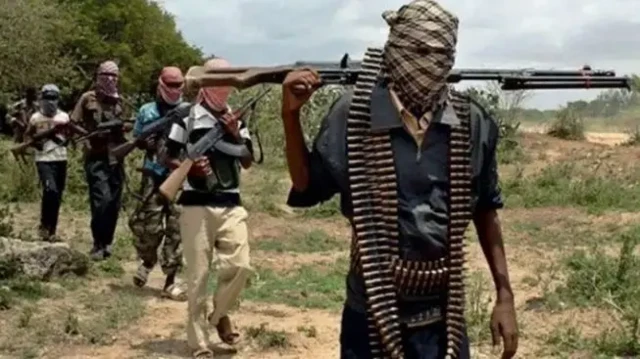
As if economic hardship were not enough, Nigerians are also contending with an alarming resurgence of insecurity. Kidnappings have become an industry. In Zamfara, Katsina, Niger and parts of Kaduna, entire communities live in fear of bandits who roam freely, abducting children, attacking farmers, and demanding ransoms with impunity. In Plateau and Benue States , violence between farmers and herders, various marauding groups, and several freelance non-State actors continues unabated. The South-East is grappling with targeted assassinations, unknown gunmen, and militarisation. In the South-South, oil theft is still rampant. In Lagos and Abuja, petty crime and violent robbery are on the rise, fuelled by desperation and a lack of jobs.
We must ask: where is the fairness in a country where safety is a privilege of the rich, secured behind high walls, armed escorts, and private estates — while the rest of the country lives at the mercy of criminals and broken promises?
Security is not a gift. It is a constitutional right. It is the most basic obligation of any government. If a government cannot protect its citizens, then its legitimacy is not just weakened — it is morally compromised.
Now, let us return to the Minister’s claim of fairness and balance, supported by the much-cited list of infrastructure projects spread across the six geopolitical zones. Here is the breakdown:
* North-West: ₦5.97 trillion
* South-South: ₦2.41 trillion
* North-Central: ₦1.13 trillion
* South-West (excluding Lagos): ₦604 billion
* South-East: ₦407 billion
* North-East: ₦400 billion
At first glance, it may seem that the government is being “fair” in its allocations. But we must move beyond superficial statistics and ask deeper questions: What is the quality of these projects? Who are the contractors? What percentage is completed? Are the contracts distributed equitably, or are they concentrated among political loyalists? Most importantly, are the projects reaching the communities that need them the most?
Consider the North-East — a region devastated by over a decade of insurgency, with crumbling schools, displaced families, and destroyed farmlands. How can it receive less than 7% of total infrastructure approvals?
Consider the South-East — where road networks are in appalling condition, federal presence is minimal, and trust in the state is at an all-time low. A densely populated region of over 30 million people gets less than ₦500 billion? How is that fairness?
Inclusivity must be measured not just in numbers but in impact — in the ability of policy to uplift, to equalise, heal old wounds, and bridge historical divides.
It is instructive to note that there is a danger of rhetoric without substance. We live in a political culture that too often confuses announcements with action. We have mastered the art of branding — of launching committees, task forces, and advisory panels — while avoiding real accountability.
But the Nigerian people are not fooled. They see through the noise. They understand that governance is not about photo ops and Twitter (X) threads. It is about how much food is in their pot. How safe they feel walking home at night. Whether their children are learning in classrooms with roofs. Whether they can afford to fall sick. Leadership is not a competition of press statements. It is a moral obligation.
This should not be misconstrued as a war cry — it is a wake-up call. To those in power, let us be clear: Nigerians are patient, yes. But they are not indifferent. The silence you hear is not acceptance — it is exhaustion. And exhaustion, when pushed too far, becomes resistance.
It is not too late to change the course. But time is running out. This administration must demonstrate, not just declare, that it is committed to fairness. It must ensure that economic reforms are paired with genuine social protections. It must redirect infrastructure to the truly marginalised. It must root out corruption, not reward it. It must address insecurity with urgency and transparency. And it must speak to Nigerians with truth, not slogans.
If the President wishes to leave a legacy of equity and inclusion, he must begin now — not in the final year of his term, not in election season, but today.
We deserve a country where leadership is accountable, not arrogant. Where justice is visible. Where policy uplifts the poor, not just protects the elite. Where a child born in Gusau, Owerri, or Ogbomosho has equal opportunity to thrive. This is not about partisanship. It is about humanity.
And so I return to the question that frames this moment in our history: Will this government deliver fairness not in speeches, but in substance? Will it govern for all Nigerians — or just for some? The people are waiting. Their patience is not infinite. History is always listening.
So I ask the Honourable Minister of Information and National Orientation, Mohammed Idris: Do you still truly believe that the Federal Government is fair to all Nigerians when so many citizens feel excluded from its promise? When hardship deepens and hope diminishes, even as official statements speak of equity and inclusion?
Fairness must be more than a headline — it must be a lived reality. If this government is sincere in its commitment, then let it show us not just the plans but the impact. In the end, the question is not whether fairness is being spoken — but whether it is being felt.
Leman is a former National Secretary, Nigeria Union of Journalists (NUJ)
email: shuaibuusmanleman@yahoo.com