




By Shu’aibu Usman Leman
Bauchi State is forging ahead with purpose. Determined to break the cycle of underdevelopment, the State Government has launched a bold, nationwide Economic and Investment Summit Roadshow—an ambitious initiative aimed at attracting credible investors and unlocking the state’s considerable potential. This is not business as usual; it is a decisive call to action.
As the roadshow progresses through the South East, it is showcasing tangible opportunities—particularly in manufacturing, agro-processing, and mechanised agriculture. These are not abstract ambitions; they represent clear, achievable routes to job creation, economic growth, and a more secure future for Bauchi State Citizens.
A defining moment of the roadshow—especially during its stop at De’Castle Resort in Enugu—was the confident announcement of plans to revive Steyr Motors Nigeria Limited. Once a beacon of industrial might, the factory had long succumbed to neglect.
Now, under the stewardship of the Bauchi State Government, a pragmatic blueprint is being implemented to breathe new life into the facility—not out of sentimentality, but as a strategic cornerstone of Nigeria’s agro-industrial resurgence.
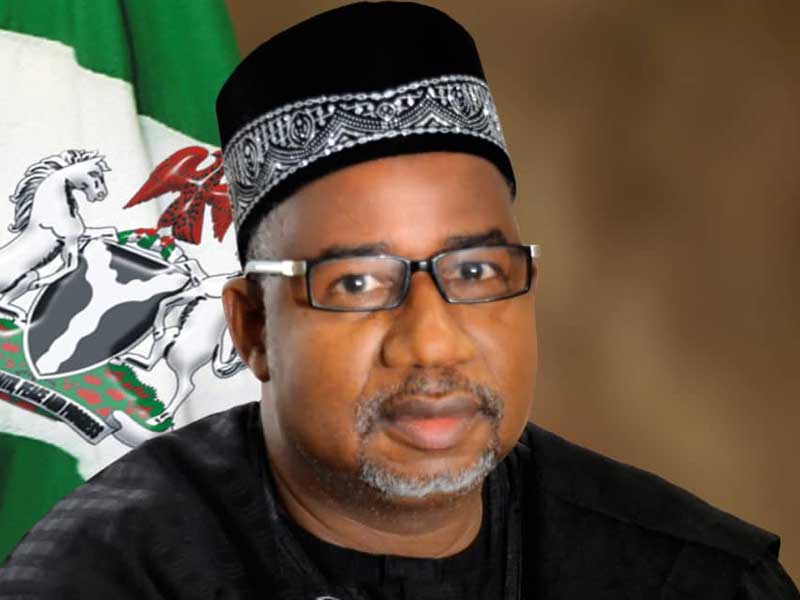
This level of vision and strategic foresight is indicative of strong leadership at the helm. Governor Bala Mohammed and his team merit recognition for driving this transformative agenda with clarity and resolve. Under his administration, the long-dormant Steyr plant was reclaimed—not as a political token, but as a deliberate economic intervention. The Governor’s unwavering commitment to rebuilding Bauchi’s industrial base, attracting genuine investors, and establishing the infrastructure for agro-industrial advancement, speaks to a leadership style grounded in action rather than rhetoric. In a political environment often marred by short-termism, Bauchi State is thinking long-term—setting a model not only for itself, but for states across the federation.
The plan is both direct and ambitious: to reinstate Steyr’s role in assembling tractors and producing agricultural machinery—right here, on Nigerian soil. If successful, this will reduce the nation’s dependence on imported equipment, catalyse local manufacturing, and generate meaningful employment. Most importantly, it will make modern farming equipment more accessible to small holder farmers, thereby transforming subsistence agriculture into a viable business enterprise.
Yet this transformation cannot be achieved by government efforts alone. The private sector—investors, engineers, operators—has a critical role to play.
Bauchi is not merely appealing for capital; it is offering robust collaboration in infrastructure, technology, and production. The goal is not limited to serving local farmers but extends to supplying agricultural markets across Nigeria and the wider West African sub-region.
This is more than economic strategy—it is economic necessity. Food security, youth employment, and industrial independence hinge on pragmatic, large-scale interventions of this nature. This is why agriculture lies at the heart of Bauchi’s economic vision. The shift from subsistence to modern, profitable agriculture is already under way. Advanced machinery, improved processing facilities, and enhanced market linkages are being introduced to help farmers grow, process, and market their produce—both domestically and for export.
Government officials have made their intentions clear: once Steyr resumes operations, locally manufactured machinery will usher in a new era of productivity. This means higher crop yields, reduced post-harvest losses, and rising incomes for the nation’s food producers.
Supporting this ambition is a broader ecosystem of complementary initiatives: irrigation schemes, agri-tech innovation hubs, and rural infrastructure development—all integral to the state’s holistic economic strategy.
Importantly, Bauchi State’s roadshow did not merely focus on tractors. It presented a comprehensive investment roadmap—highlighting priority sectors such as agro -processing and input manufacturing, solid minerals and mining services, renewable energy, particularly rural electrification, building materials and construction, tourism and hospitality development.
With over 4.2 million hectares of arable land, untapped mineral deposits, and an emerging industrial base, Bauchi State is positioning itself as a strategic player in regional trade. It is backing this vision with meaningful investor incentives: streamlined land access, tax holidays, and capital protection measures. Special Economic Zones and industrial clusters are already in development, offering purpose-built infrastructure for manufacturers and agribusiness operators.
Encouragingly, early responses from business leaders in the South East of the Country are promising. Preliminary discussions are ongoing around equipment leasing, processing partnerships, logistics ventures, and skills development initiatives.
This is what genuine progress looks like. But more significantly, this signals a fundamental shift from dependence on federal allocations. Bauchi State is crafting a new economic model—one rooted in productivity, innovation, and private-sector leadership. As the roadshow travels through other regions, one message remains unequivocal: the State is open for business—and ready to lead.
This matters well beyond the State.
Other States such as Borno, Yobe, and Adamawa have suffered grievously from conflict, insurgency, and economic collapse. Over the past decade, livelihoods have been decimated, schools deserted, and millions of young people left without direction or hope.
These states must look to Bauchi—not as a rival, but as a roadmap. A state choosing resilience over resignation. Reviving dormant industries. Attracting investment. Constructing farm-to-market infrastructure. Training youth. These are not luxuries; they are lifelines.
And they are our most reliable tools for dismantling the economic roots of extremism.
The tens of thousands of out-of-school children across the North East sub region represent both an urgent challenge and a vast opportunity.
They require more than classroom instruction—they need practical pathways: vocational training, apprenticeships, and gainful employment within agro-industrial value chains. The cost of inaction is rising.
The rewards of intervention are greater still.
Bauchi State must therefore not lose focus. The momentum is tangible—but so too is the risk of regression.
The path ahead will be challenging. There will be setbacks, pressure to relent, and voices urging delay. But the choice is clear: press forward or fall behind.
To stay the course, Governor Bala Mohammed and his team must remain fully engaged—with investors, with communities, and with the individuals doing the heavy lifting on the ground. The government must deliver on its promises: incentives, infrastructure, transparency. And it must establish support systems that enable fledgling enterprises to survive, scale, and thrive.
This requires sustained investment in skills, technical education, and regulatory reform.
It demands continuous learning, adaptation, and responsiveness to data, feedback, and market realities.
The revival of Steyr is more than a headline—it is a signal.
A state that once watched its industries decay is now reclaiming its future. This is precisely the kind of leadership Nigeria needs—not only in Bauchi State , but nationwide.
Let it be said plainly: Bauchi State cannot afford to waver. Not now. Not when the elements for genuine transformation are aligning. Not when the state has a real chance to reshape its economy and improve the lives of its people.
The stakes are too high. The risks of failure, too severe. And the rewards of perseverance, too substantial to ignore. A self-reliant economy.
A dynamic agricultural sector. Revived factories. Hopeful, employed young people.These are not distant aspirations—they are within reach. But only if Bauchi State remains steadfast.
The choice is ours. The time is now.
Leman, is former National Secretary, Nigeria Union of Journalists (NUJ)
Email: shuaibuusmanleman@yahoo.com