





By Shu’aibu Usman Leman
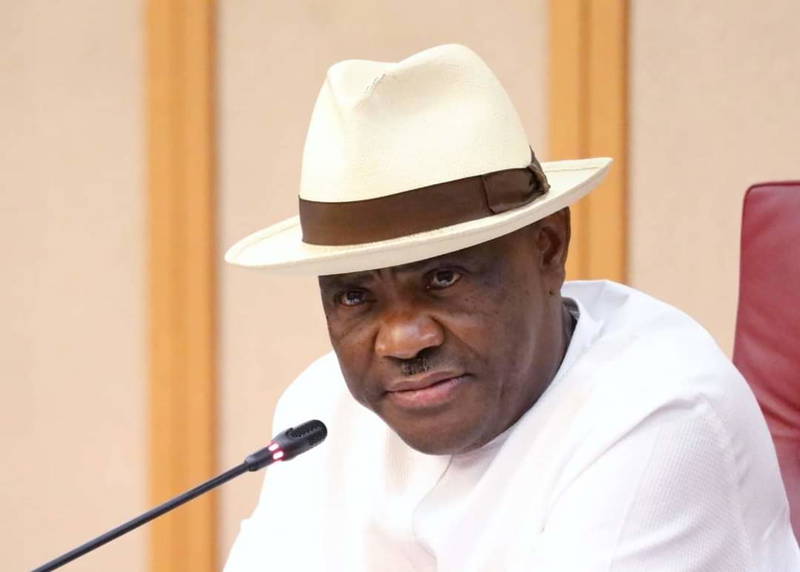
The Federal Capital Territory Administration (FCTA), under the steadfast leadership of the Minister, Barrister Nyesom Wike, recently embarked on a rigorous campaign to tackle substantial ground rent arrears in the nation’s capital.
This bold initiative targets 4,794 properties with outstanding rents for over 43 years.
Amongst these are prominent places such as Wadata Plaza, the headquarters of the Peoples Democratic Party (PDP).
The FCTA’s decisive action have included sealing premises belonging to high-profile entities, including major financial institutions and government agencies such as the Federal Inland Revenue Service (FIRS), both of which are said to have failed to remit their ground rents for many years.
The acting National Chairman of the PDP, Umar Damagum, has vociferously condemned the sealing of the party’s national secretariat by the FCTA Administration as the very height of governmental irresponsibility.
Numerous commentators and party loyalists have described the abrupt sealing of the venerable National Secretariat of the PDP ostensibly over alleged accumulated ground rent as a perilous escalation of increasing authoritarian tactics.
This singular action, in their view, is profoundly ill-advised, highly suspicious, and appears to be a calculated and deliberate attempt to silence legitimate political opposition.
For these observers, the targeting of a major opposition party’s headquarters sends a chilling and unambiguous message that dissent will not be tolerated. They argue that such a move can only lead to a pervasive climate of fear, thereby stifling free speech and legitimate criticism – both of which are absolutely essential for the robust functioning of a healthy democracy.
Furthermore, they contend that this unprecedented move could set a dangerous precedent, normalising the use of administrative pretexts to undermine political pluralism.
These notwithstanding,whilst acknowledging the undeniable fact that the deployment of administrative powers, such as ground rent enforcement, as a tool to intimidate or incapacitate political opponents, or indeed to dislodge citizens from their rightful properties, constitutes a direct and egregious abuse of state authority – effectively weaponising government agencies and transforming them from vital service providers into instruments of oppression – a crucial question remains.
We must ascertain whether the proprietors of Wadata Plaza are, in fact, genuinely in default of payment.
For ultimately, no individual or entity, regardless of their political affiliation, should be considered to be above the strictures of the law.
The transparency of the FCTA’s actions and the clarity of the alleged arrears are paramount to ensuring public trust and upholding the principles of natural justice.
However, in a commendable display of empathy for the public’s predicament, President Bola Ahmed Tinubu has since granted a temporary two-week grace period for defaulters to settle their outstanding ground rent debts.
While the overarching objective is to bolster the capital’s infrastructure and internal revenue generation (IGR), this brief window may prove woefully inadequate. Such a truncated timeframe risks imposing considerable strain on residents and businesses within an already challenging economic climate.
Many individuals and organisations may find it exceptionally difficult to amass the substantial sums required to clear years of arrears within such a short period, thereby facing the very real threat of property revocation and the potential jeopardising of their livelihoods.
Furthermore, this situation starkly illuminates a wider systemic issue: a pervasive lack of public awareness regarding ground rent obligations. A multitude of property owners, including various government agencies, military establishments, and even foreign embassies, may not fully comprehend their financial responsibilities or the prescribed payment processes.
For instance, a recent public notice by the FCTA revealed that 3,383 plots are ineffectively managed, a figure that includes properties held by numerous ministries and embassies, underscoring the widespread nature of this challenge across the capital.
To navigate this critical juncture, a pragmatic re-evaluation of the grace period is absolutely essential. Extending the current timeline, coupled with the introduction of flexible payment plans, could offer citizens and businesses a more feasible pathway to meet their financial obligations.
Such an approach would not only facilitate the recovery of vital revenue for the FCTA but also afford residents the necessary opportunity to comply without the immediate threat of punitive measures. This measured approach aligns with principles of fairness and economic stability.
Historically, similar urban reforms have demonstrated considerable promise. During Malam Nasir el-Rufai’s tenure as FCT Minister, resolute actions were undertaken to address urban decay, including the systematic removal of illegal structures.
This historical context underscores the importance of decisive, albeit sometimes unpopular, actions in effective urban management and highlights the indispensable need for a collaborative environment between the FCTA and the broader community
Other urban centres, both domestically and internationally, serve as invaluable references for developing and maintaining robust and equitable ground rent systems. In Lagos, for example, the consistent collection of ground rent is integral to the funding of essential public services, underpinning urban development. Similarly, in nations like the United Kingdom, comparable systems of council tax and business rates underpin local services crucial for societal function and sustainable development.
The enduring success of these systems often hinges on transparent communication, easily accessible payment options, and a comprehensive public awareness of the tangible benefits derived from tax contributions, from refuse collection to public transport and educational facilities.
As the FCTA continues to implement its ground rent enforcement strategy, it is paramount that these actions are complemented by a robust public awareness campaign.
This campaign should comprehensively inform residents of their responsibilities and underscore the critical importance of timely payments.
Transparency, clarity, and a genuine commitment to public engagement will be instrumental in fostering a compliant and prosperous environment within the Federal Capital Territory.
This includes clear communication channels, easily digestible information on how to pay, and a clear explanation of where the collected funds are being allocated.
In parallel, there is a pressing need for a fundamental cultural shift concerning the prevailing tax aversion amongst Nigerian citizens.
The FCTA’s recent belt-tightening measures are a direct consequence of a broader trend of non-payment that directly jeopardises the provision of vital public services, from maintaining roads to funding healthcare.
For Nigeria to progress on the global stage, embracing the responsibility of tax contributions must become a widely recognised and embraced civic duty by every citizen.
This requires a concerted effort to educate the populace on the direct link between tax contributions and the quality of public services they receive.
The enduring success of Abuja ultimately hinges on a shared understanding of mutual responsibility between the authorities and citizens.
This necessitates the implementation of fair policies that are empathetic to the economic realities of residents, thereby paving the way for sustainable urban development.
As the FCTA enforces necessary actions to reclaim unpaid rents, a compassionate approach that prioritises economic stability and the well-being of its citizens is absolutely essential.
Collaborative efforts between the FCTA and the diverse residents of Abuja can lay the groundwork for a thriving urban centre, ultimately reflecting the aspirations of its varied populace and harnessing their collective commitment to progress.
Shu’aibu Usman Leman is a former National Secretary of the Nigeria Union of Journalists (NUJ)
email:shuaibuusmanleman@yahoo.com